

Ants
Formicidae (Carpenter Ants: Camponotus spp.)
Relentless foragers that infiltrate food sources and compromise structural integrity.
Ants Removal Services
"RainCity Pest Control are highly skilled and reliable".
Pet-friendly
Pest Solutions
Pest Solutions
Proudly Canadian

Got Ants? Raincity can handle it.
Ants Overview
Highly organised foragers that invade kitchens, damage structures, and establish colonies that are nearly impossible to eliminate without professional treatment.
Indentification
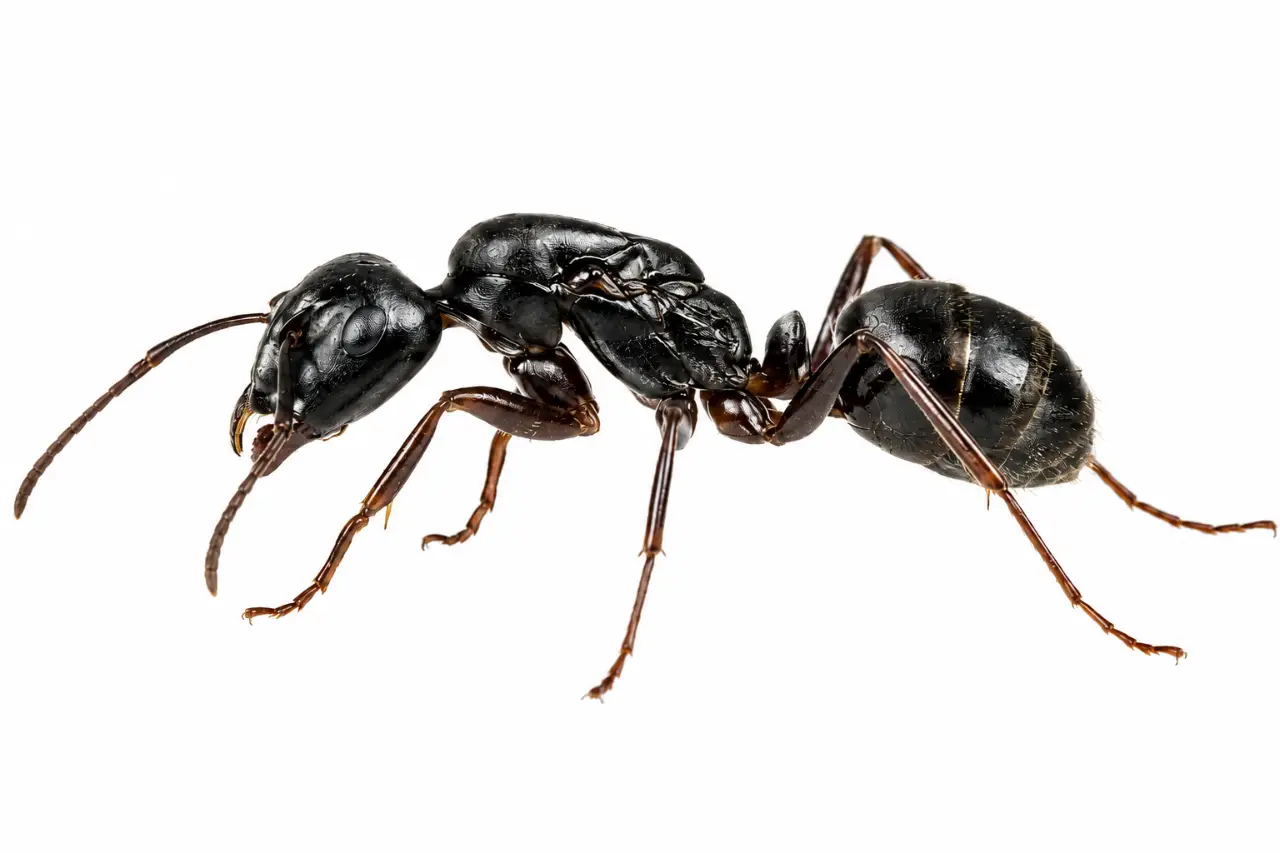
Six legs; elbowed antennae; three distinct body segments (head, thorax, abdomen); Carpenter Ants are large (6–25mm), black or black-and-red.
Primary Diet
Moderate — queens can live 15+ years; colonies grow slowly but become very large
Breeding
Omnivorous — sugars, proteins, other insects, plant material
More Than a Nuisance — A Structural Threat
Ants are the most commonly reported pest in British Columbia homes and businesses. While most species are a nuisance, Carpenter Ants — prevalent throughout the Lower Mainland — actively excavate wood to build their galleries, causing significant structural damage over time. A single ant colony can contain hundreds of thousands of workers, and what you see on the surface is rarely the full picture.
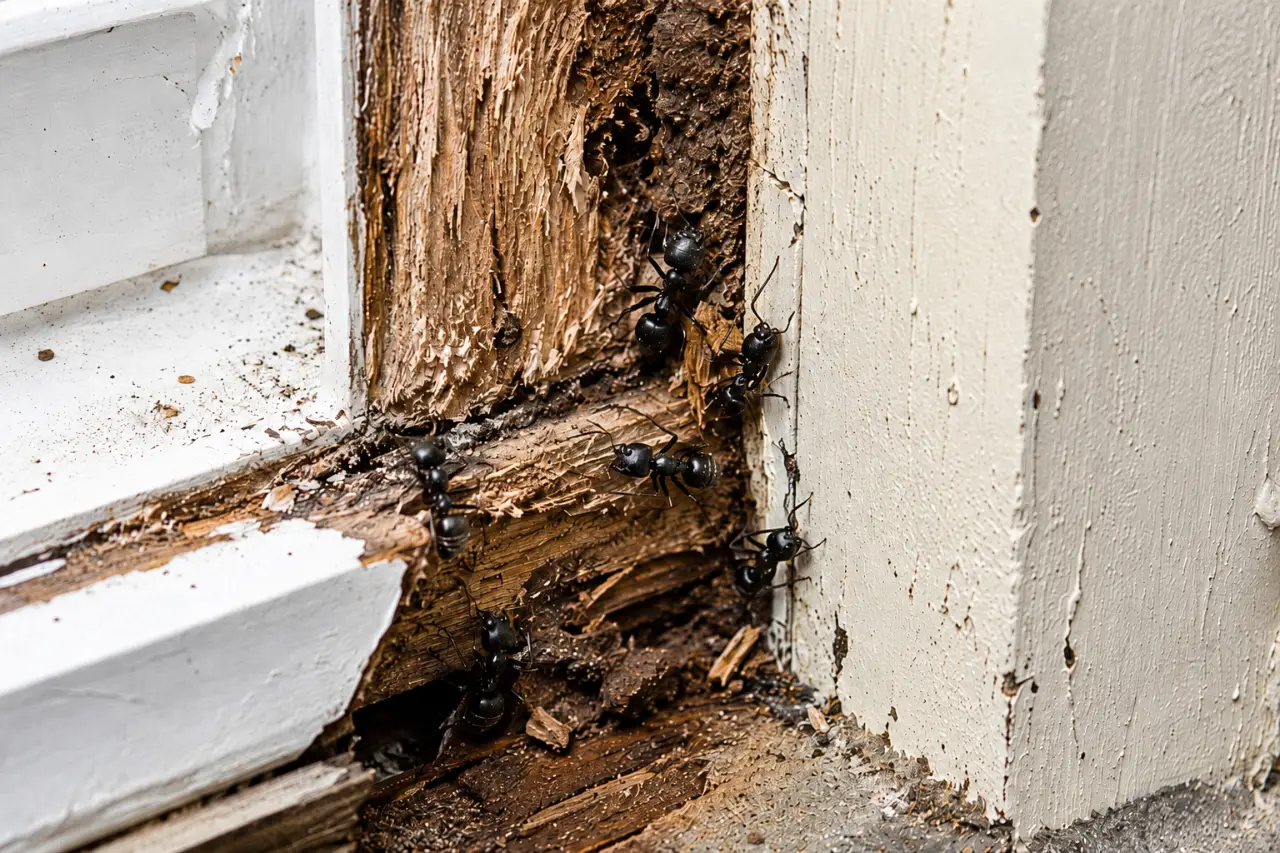
In the Lower Mainland, Carpenter Ants are the species to watch. They do not eat wood — they excavate it, preferring wood already softened by moisture damage. Finding Carpenter Ants indoors is often a warning sign of a hidden moisture or rot problem.
Safety Rating
Targeted Baiting & Perimeter Treatment (Pet/Kid Safe when dry)
Prevention Tip
Eliminate moisture sources — fix leaking pipes, ensure proper drainage away from foundations, and replace any water-damaged wood. Stack firewood at least 6 metres from your home.
DIY Risks
Over-the-counter sprays kill visible foragers but do not reach the queen or colony core. Disturbing a trail can cause the colony to split into multiple satellite colonies, making the problem worse.
RainCity Advantage
RainCity uses slow-acting professional baits that workers carry back to the colony, eliminating the queen and entire nest. Perimeter treatments create a protective barrier to prevent re-entry.
Outcome
Colony elimination typically achieved within 1–3 treatments over 2–4 weeks depending on species and colony size.
Control Method
Slow-acting gel baits placed along foraging trails combined with targeted perimeter residual treatment and moisture source identification.
Technical
Active Pest Seasons
Summer
Spring
Fall
RainCity Risk Index
Ants
Health
Threat
3 / 10Property
Damage
8 / 10
Nuisance
Level
7 / 10
Bite & Disease Exposure
Structural & Material
Noise & Disruption
Most species pose minimal health risk. Fire ant stings can cause allergic reactions, though these are rare in BC. Food contamination is the primary concern.
Carpenter Ants excavate galleries inside moist or damaged wood, weakening beams, window frames, and decking over time. Damage is often hidden until advanced.
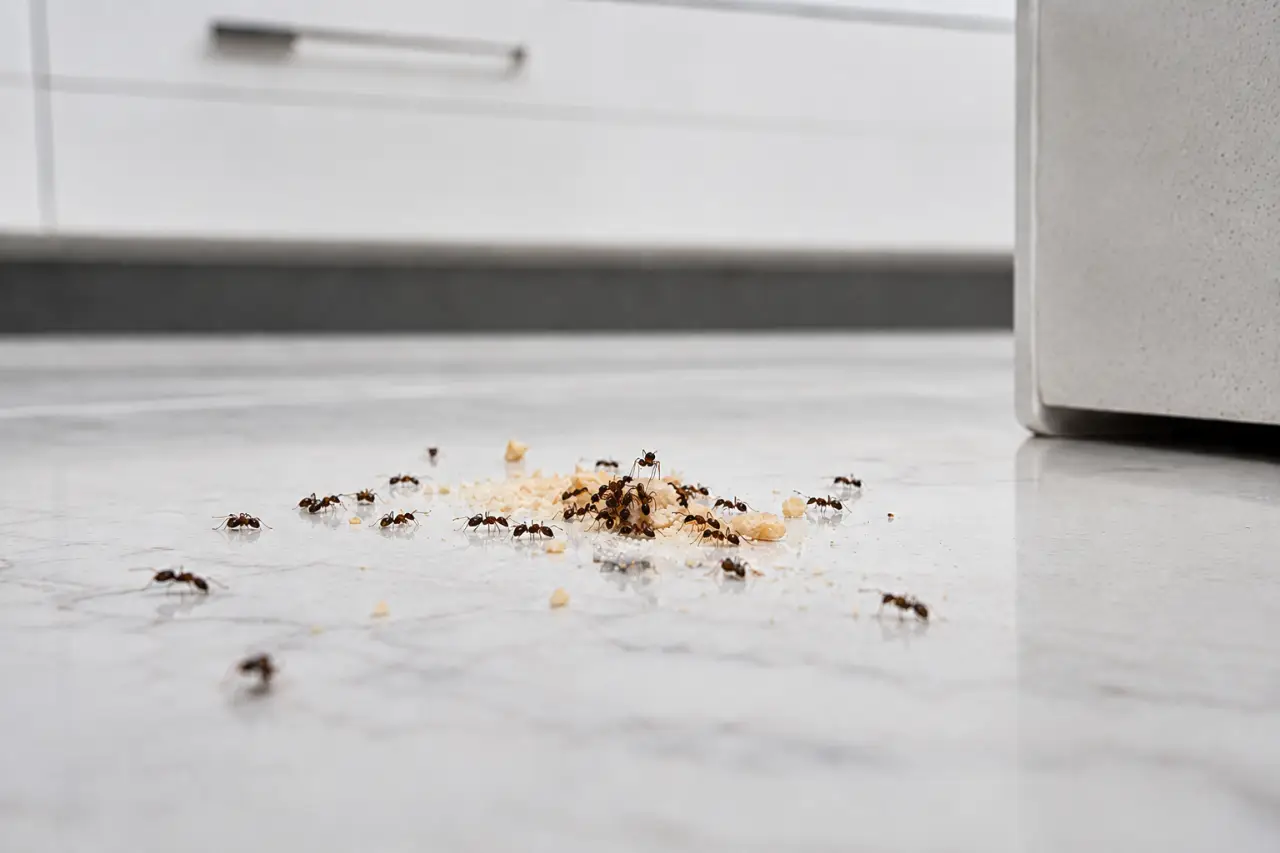
Persistent trails through kitchens and pantries contaminate food. Seasonal swarms of winged reproductives are alarming and indicate a mature, established colony.
Signs of Activity
Early detection prevents small issues from becoming full infestations. Watch for signs in hidden or undisturbed areas.
Foraging Trails
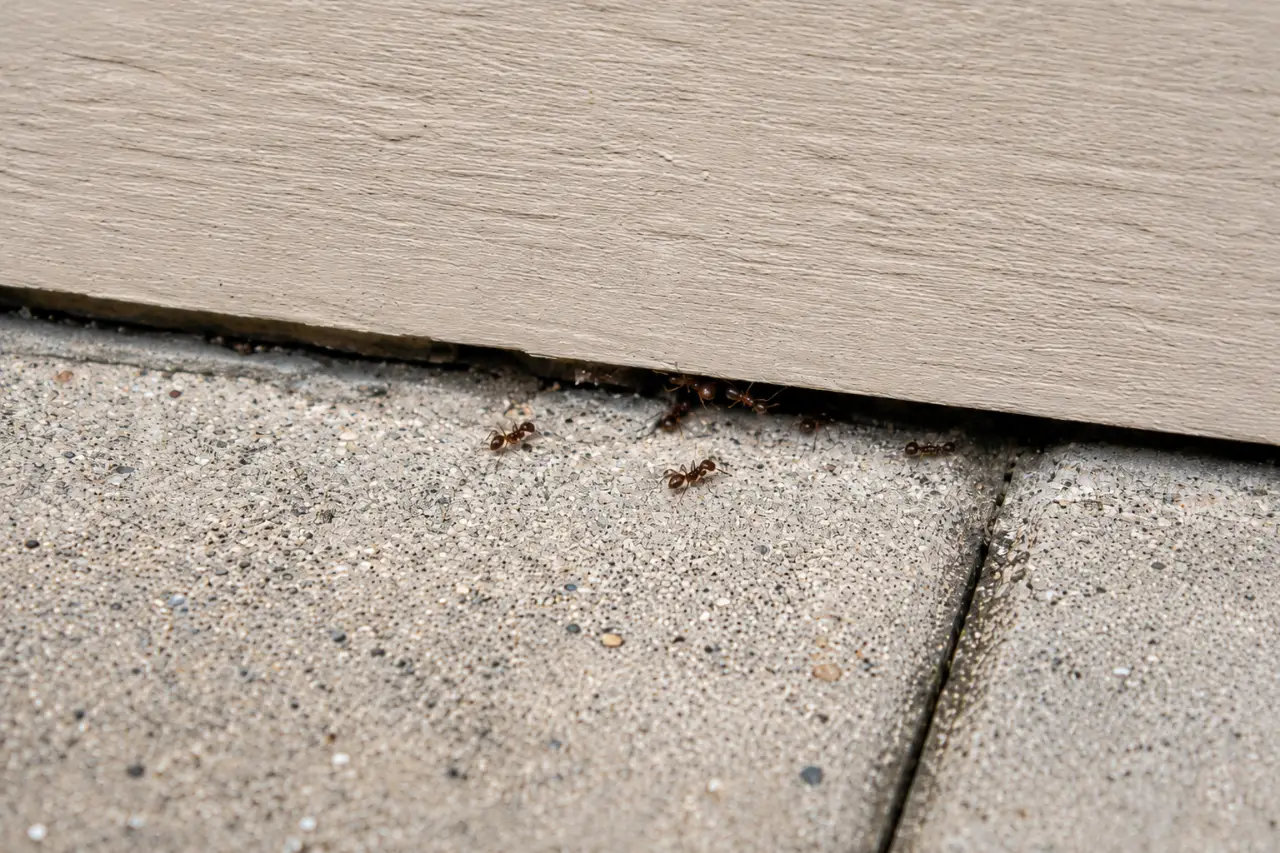
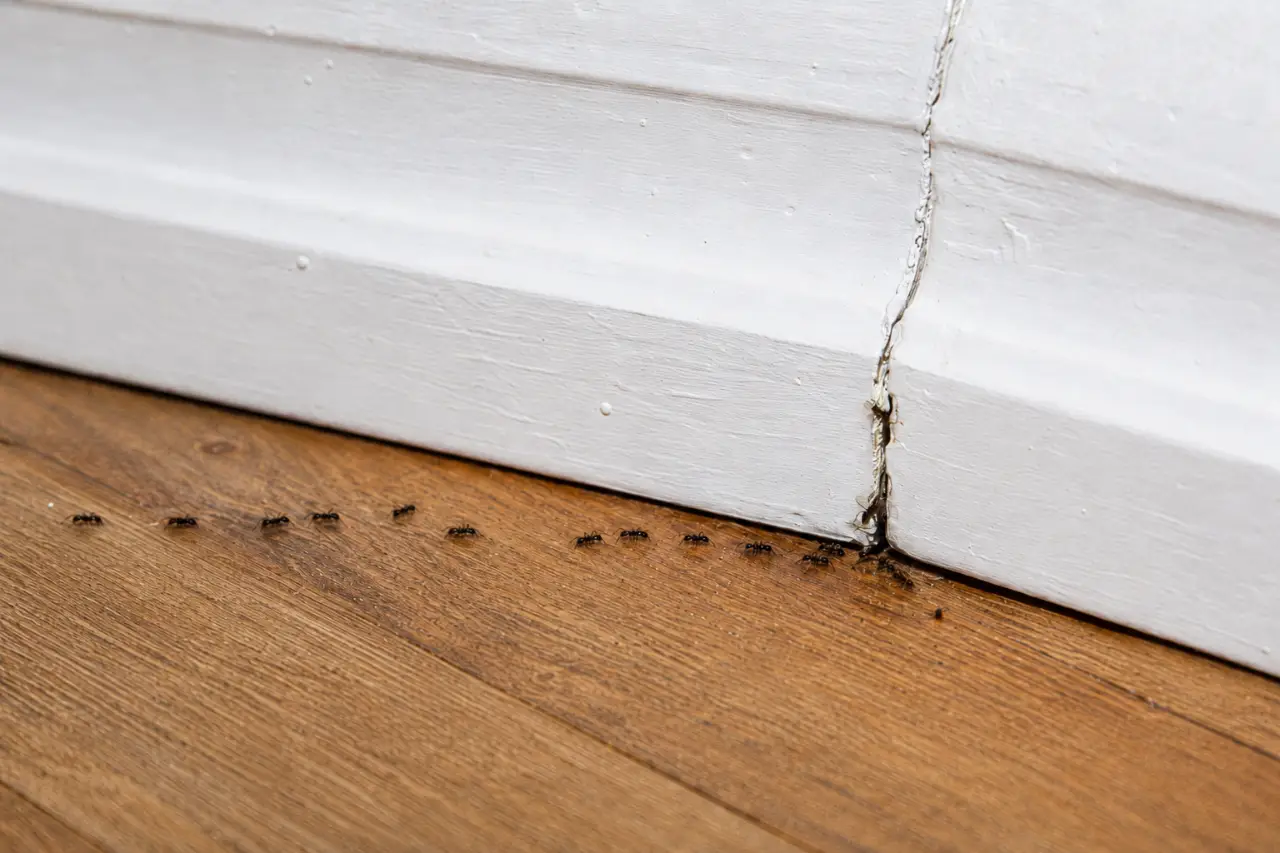
Visible lines of ants moving between a food source and a wall void, window frame, or exterior entry point — often along baseboards or countertops.
Frass Piles
Small piles of coarse sawdust-like material near wood structures, indicating Carpenter Ant excavation activity inside walls or beams.
Winged Swarmers
Winged reproductive ants (alates) emerging indoors in spring indicate a large, mature colony established inside the structure.
Rustling Sounds in Walls
A faint rustling or crinkling sound within wall voids, particularly at night, caused by Carpenter Ants moving through their galleries.
Damaged or Hollow Wood
Wood that sounds hollow when tapped, or structural timber that crumbles easily, can indicate long-term Carpenter Ant excavation damage.
Frequently Asked Questions
Find expert answers to our most common questions and discover how we keep your home or business pest-free.
Kitchens provide the two things ants need most — food and moisture. Even small crumbs and spills are enough to sustain a large foraging trail. The colony itself is almost always located elsewhere, often outside or in a wall void.
Carpenter Ants do not pose a direct health risk, but their structural damage can be significant and costly. They are often a secondary indicator of a moisture problem that also needs to be addressed.
Winged ants are reproductive males and females leaving a mature colony to start new ones. Seeing swarmers indoors is a strong indicator of an established colony inside your home.
Professional bait treatments are slow-acting by design — workers must carry the bait back to the colony. Most infestations are resolved within 1–3 visits over 2–4 weeks.
Yes. Sealing exterior cracks, fixing moisture issues, keeping food in airtight containers, and maintaining a perimeter treatment barrier significantly reduces the chance of re-infestation.
Ready to Get Rid of Ants?
Let our professional team protect your home or business with proven solutions that work.
Schedule an inspection
- Local, licensed & Insured
- Fast Response & Reliable Service
- Satisfaction Guaranteed