

Seagulls
Larus glaucescens (Glaucous-Winged Gull) / Larus californicus (California Gull)
Aggressive nesting birds that contaminate commercial properties and pose safety risks to staff and customers during breeding season.
"Your pest problem
is our business"
is our business"
- RainCity Pest Control -
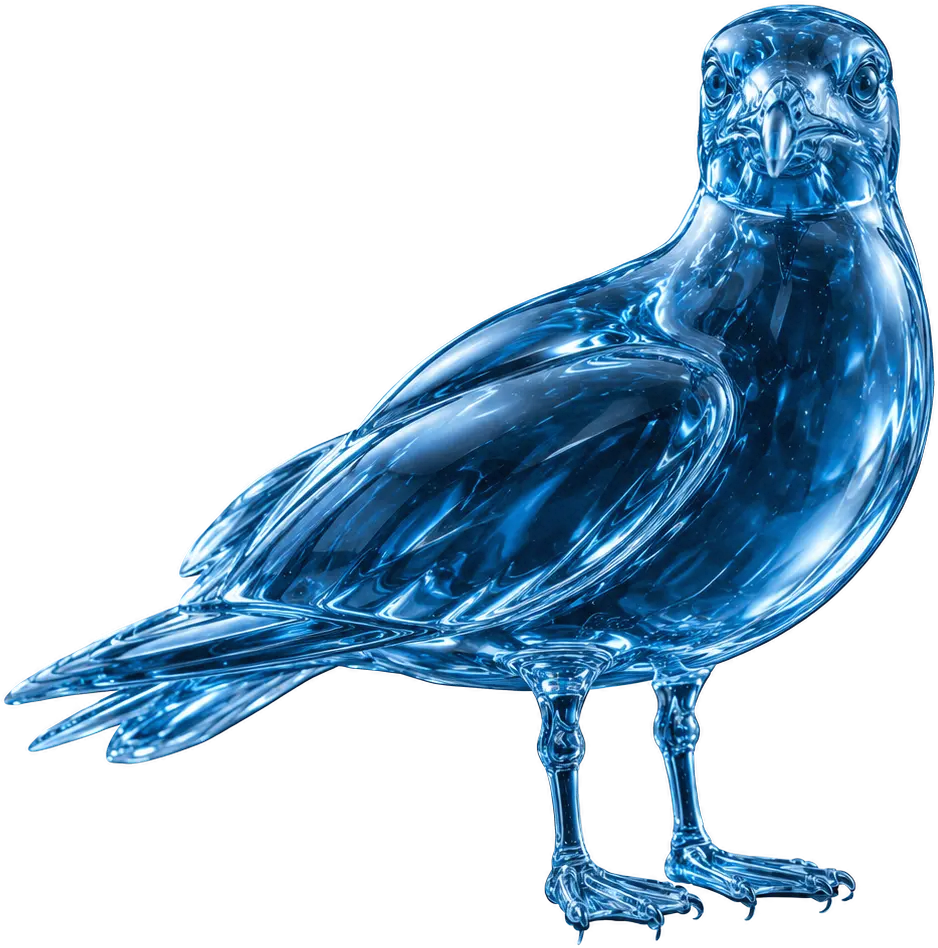
Pest problems in Seagulls? Raincity can help!
Proudly Canadian
Pet Friendly

Seagulls
Overview
Aggressive coastal scavengers that roost on commercial rooftops, contaminate food preparation areas, and dive-bomb staff and customers during nesting season in British Columbia.
Aggressive Roosters That Disrupt Business and Health Standards
Seagulls are a significant pest management challenge across coastal British Columbia, particularly for commercial properties near waterfronts, industrial areas, and retail centres. During nesting season — April through July — gulls become highly territorial and will aggressively dive-bomb anyone approaching their nest site, creating genuine safety risks for staff and customers. Their large volume of droppings contaminates food preparation areas, loading docks, and outdoor dining spaces, posing serious food safety compliance issues for affected businesses.
Get a free Quote. Give us a call.
236.521.8668


Raincity
Risk Index
Our Risk Index breaks down each pest's threat level so you know exactly what you're dealing with and how urgently to act.
Risks: Seagulls
Property
Damage
7 / 10
Nuisance
Level
9 / 10
Health
Threat
7 / 10Structural & Material
Noise & Disruption
Bite & Disease Exposure
What This Means For You
Large volumes of highly acidic droppings rapidly degrade roofing membranes, HVAC equipment, solar panels, and painted surfaces. Nesting material blocks drainage systems and creates fire hazards near rooftop equipment.
Aggressive dive-bombing during nesting season creates genuine safety risks and deters customers from outdoor areas. Loud calling disturbs occupants and neighbours. Droppings on signage, vehicles, and entrances damage business presentation.
Seagull droppings contain Salmonella, Campylobacter, and E. coli — a significant food safety risk near food preparation and storage areas. Dried droppings become airborne and can cause respiratory irritation.
Know Your Pest
Seagulls Knowledge, Prevention Tips & Home Protection Advice.
Facts: Seagulls
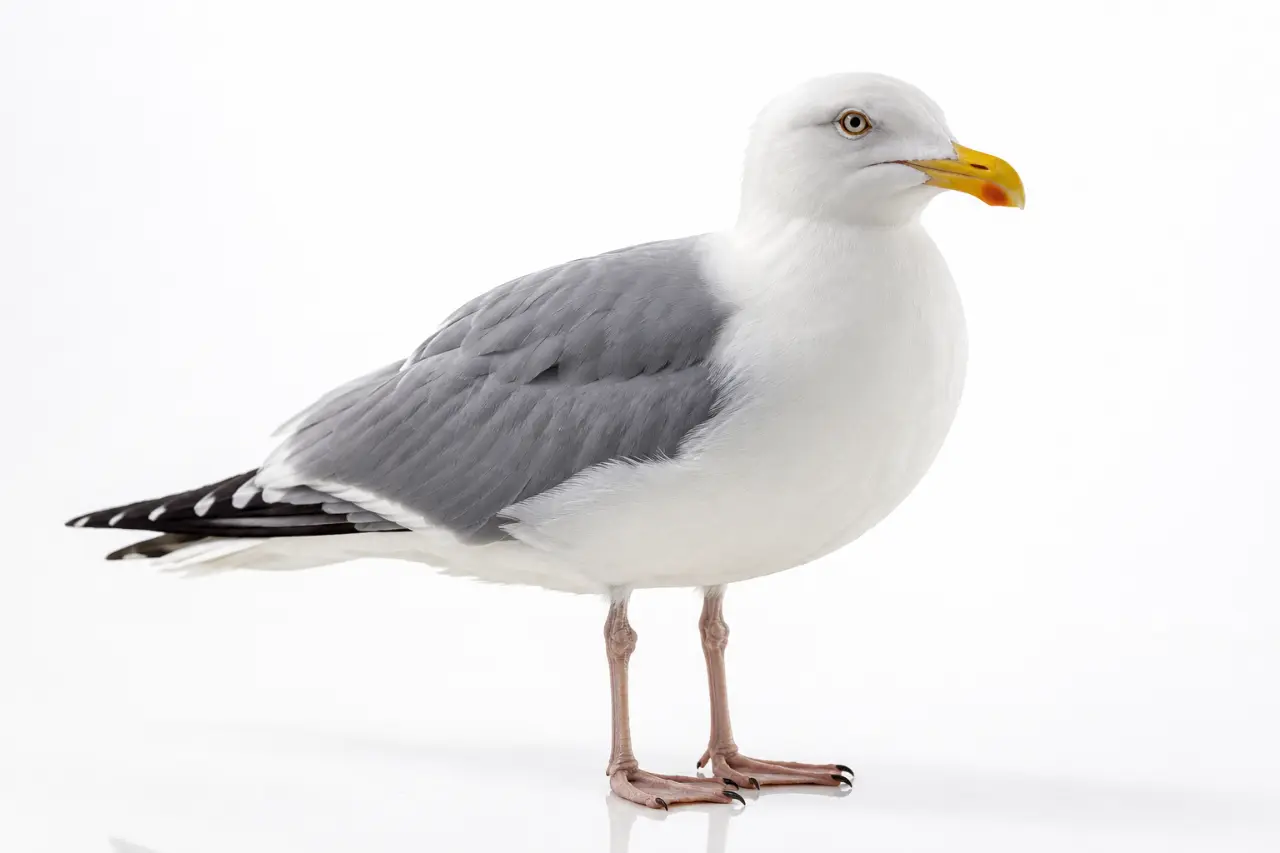
Large, robust birds 55–65cm; white body with grey wings; yellow bill with red spot; pink legs. Loud, distinctive call. Highly opportunistic and bold around humans.
Opportunistic omnivores — fish, invertebrates, refuse, food waste, and scavenged scraps
One brood of 2–3 eggs per year; strong nest site fidelity — pairs return to same rooftop annually
Summer
Spring
Fall
Winter
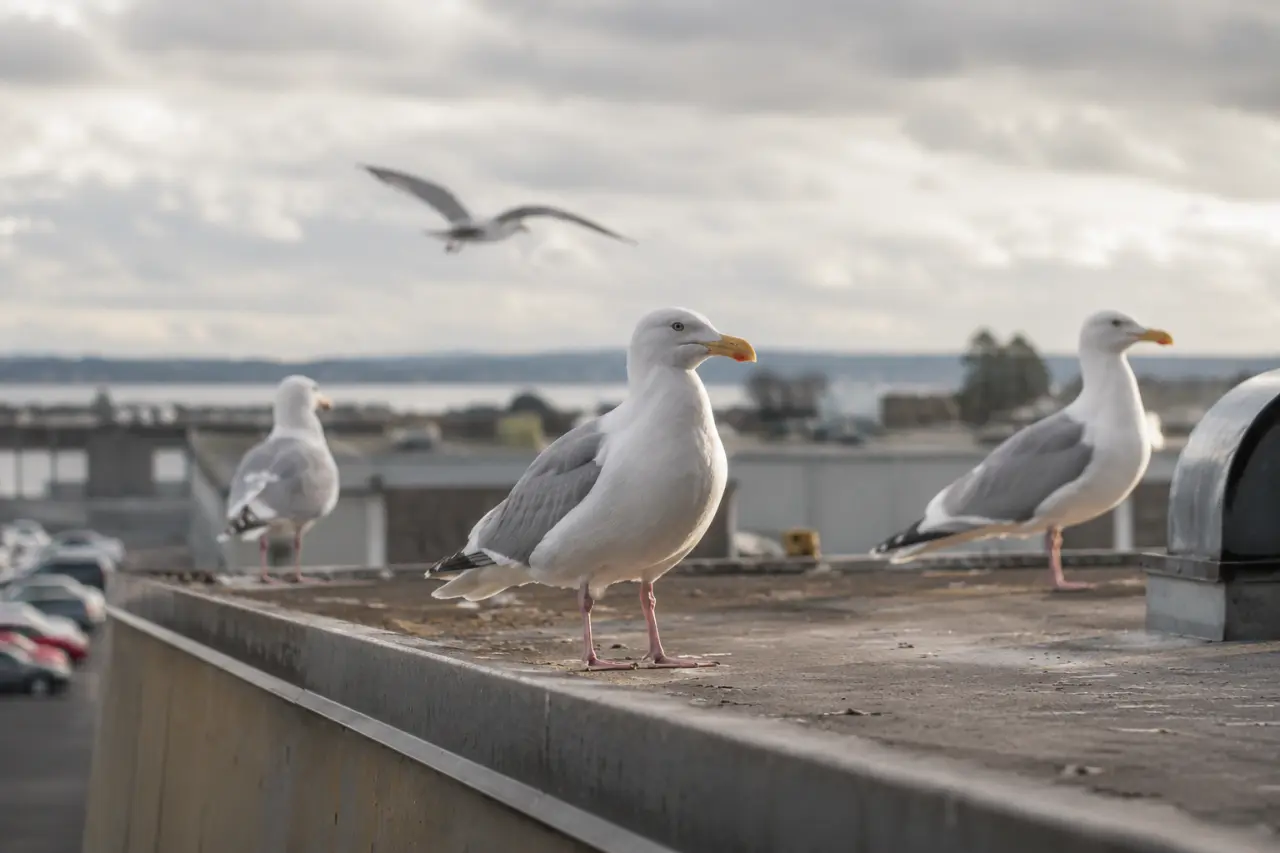
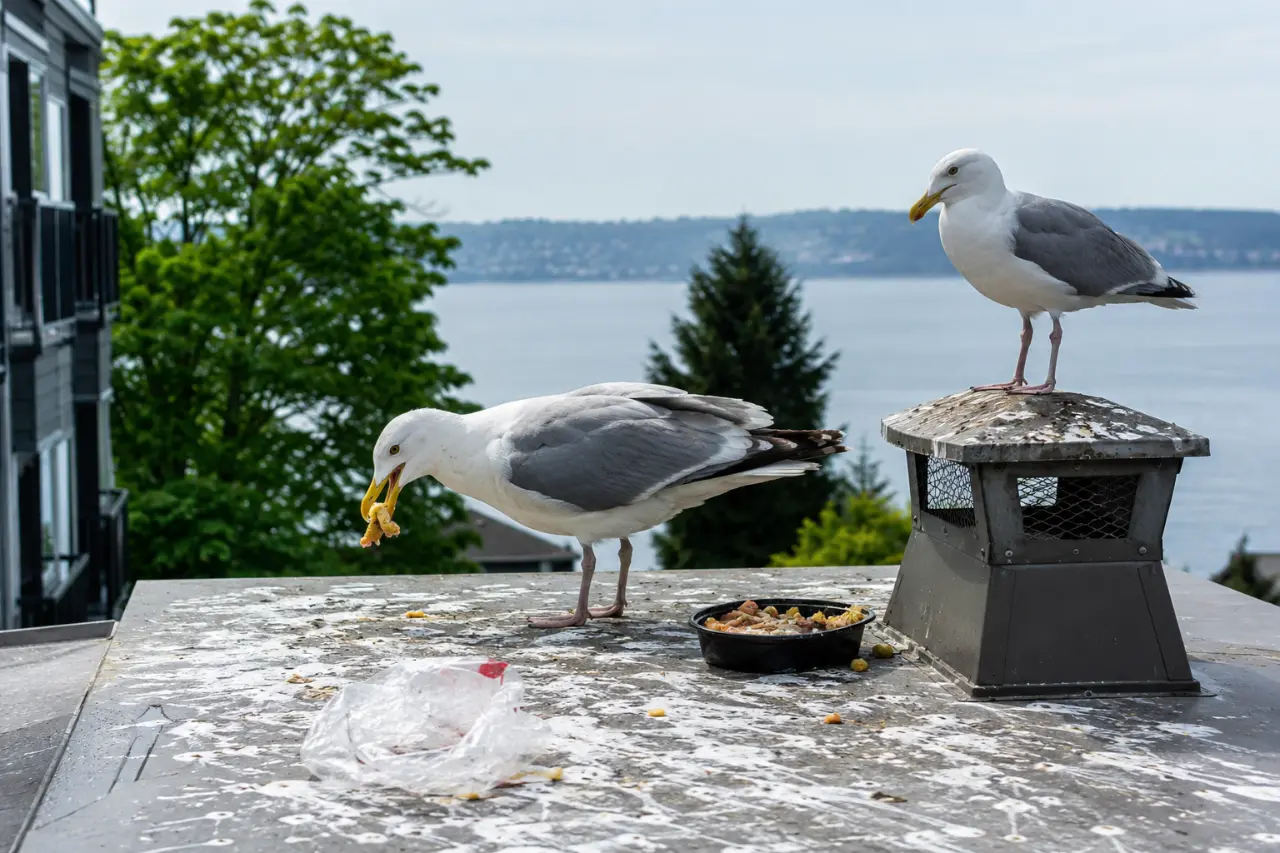
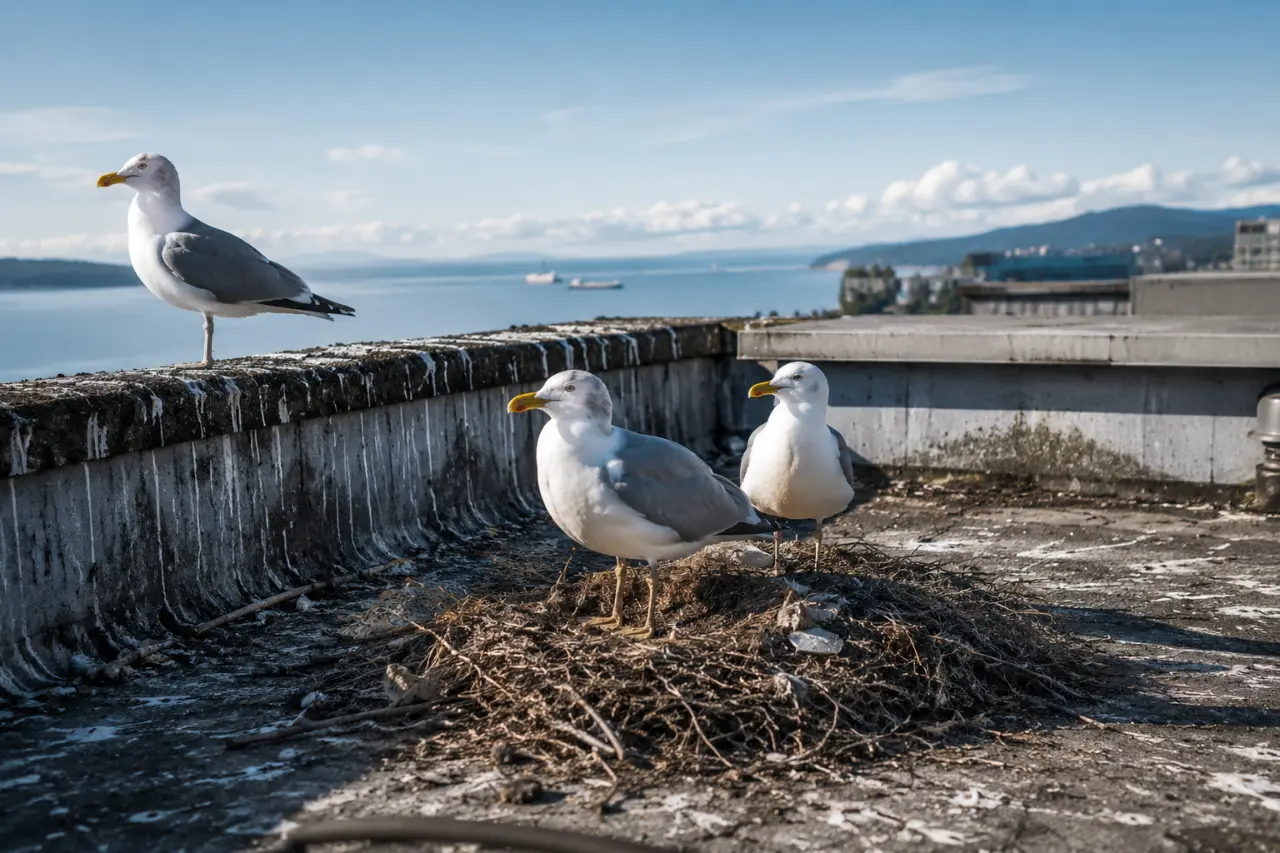
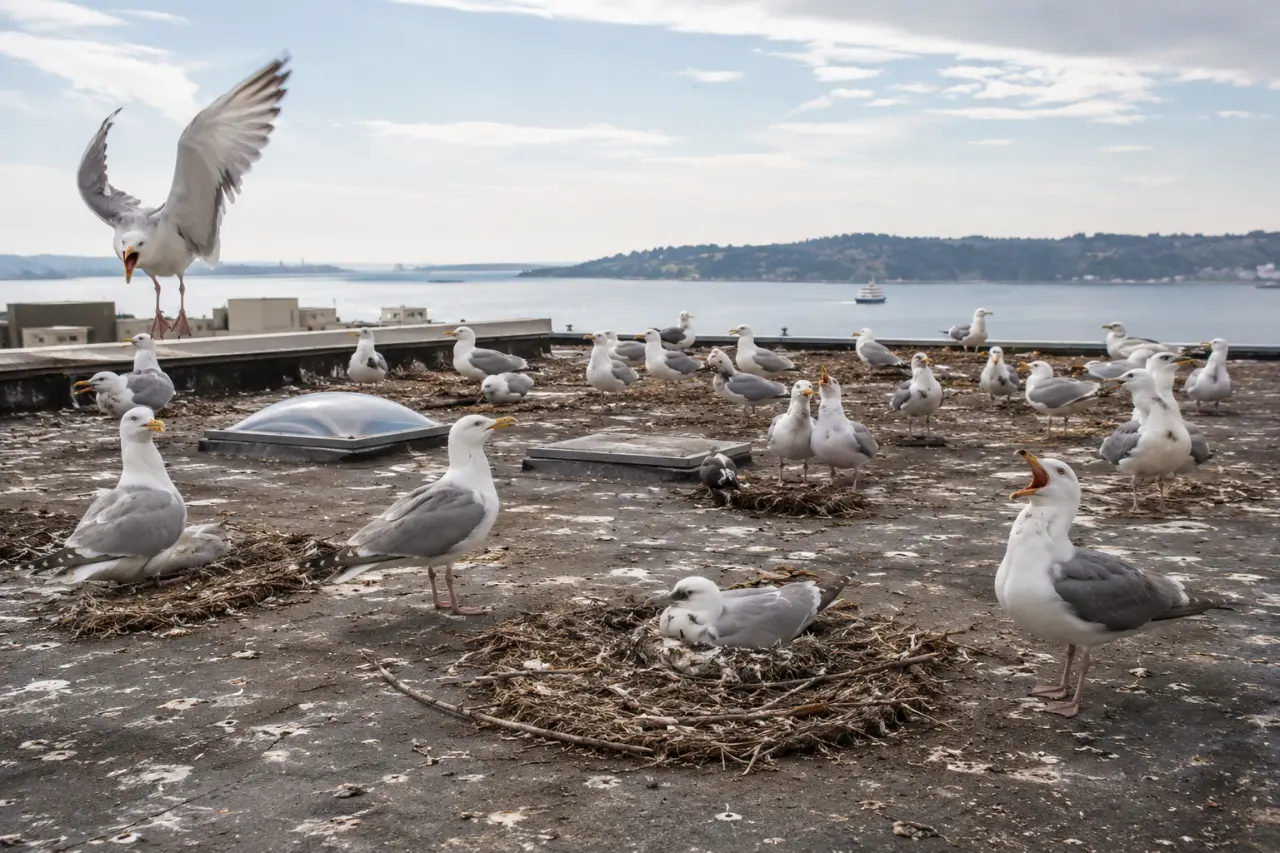
Seagulls are protected under the Migratory Birds Convention Act in Canada — active nests, eggs, and chicks cannot be disturbed without a permit. This makes pre-season deterrent installation before April critical. Once a nest is established, management options are significantly restricted until the chicks fledge.
Install deterrents before April — once seagulls establish a nest, legal restrictions limit intervention options until chicks fledge. Keep flat rooftop areas clear of debris and standing water that attract gulls as potential nesting habitat.
Physical Exclusion & Pre-Season Deterrent Installation (Permit may be required for active nests)
Disturbing an active seagull nest, eggs, or chicks without a permit is a federal offence under the Migratory Birds Convention Act. Ineffective DIY deterrents allow birds to establish nesting habits that become legally protected before they can be addressed.
RainCity provides pre-season deterrent installation using tensioned wire systems, bird netting, and rooftop spikes, and can advise on the permit process for properties with existing active nests under the Migratory Birds Convention Act.
Pre-season rooftop audit and professional installation of tensioned wire, anti-roosting spikes, and exclusion netting at all identified nesting and roosting points.
Pre-season deterrent installation immediately prevents nesting establishment; existing active nests managed in compliance with federal wildlife legislation.
Signs of Activity
Early detection prevents small issues from becoming full infestations. Watch for signs in hidden or undisturbed areas.
Rooftop Nesting Activity
Nests constructed from grass, seaweed, and debris on flat rooftops, rooftop plant rooms, and behind HVAC equipment — typically established from April onwards.
Dive-Bombing Behaviour
Aggressive swooping and dive-bombing at staff and visitors approaching areas near an active nest — a clear sign of an established nesting pair defending eggs or chicks.
Heavy Droppings on Rooftop Equipment
Large accumulations of white droppings on HVAC units, skylights, solar panels, and rooftop walkways indicating a regular roosting or nesting site directly above.
Loud Calling at Dawn
Persistent loud calling beginning at sunrise from rooftop locations — seagulls are vocal throughout the nesting season and their calls carry significant distances in urban environments.
Chick Sightings on Roof
Fluffy grey chicks visible on flat rooftop areas from June onwards — confirmation of a successful nest that will now be legally protected until the young birds fledge.
Frequently Asked Questions
Find expert answers to our most common questions and discover how we keep your home or business pest-free.
Not once eggs or chicks are present. Active seagull nests are protected under the federal Migratory Birds Convention Act. Disturbing an active nest, eggs, or chicks without a permit is a federal offence. Pre-season deterrent installation before April is the key to legal and effective management.
February or March — before seagulls begin scouting nesting locations. Once a pair identifies a rooftop as suitable and begins nest construction, legal restrictions significantly limit intervention options until the chicks fledge in August or September.
Yes. Seagull droppings routinely test positive for Salmonella, Campylobacter, and E. coli. For food businesses, gull activity near food preparation areas, loading docks, or outdoor dining represents a serious compliance risk under BC food safety regulations.
Seagulls have very strong nest site fidelity — mated pairs return to the same rooftop year after year. Once a rooftop is used successfully for nesting, it will be used again the following year unless physical deterrents are installed to make it inaccessible.
No. Professional deterrent systems — tensioned wire, spikes, and exclusion netting — are humane and simply make roosting and nesting surfaces uncomfortable or inaccessible. Birds are redirected to alternative locations without harm.
Ready to Get Rid of Seagulls?
Let our professional team protect your home or business with proven solutions that work.
Schedule an inspection
- Local, licensed & Insured
- Fast Response & Reliable Service
- Satisfaction Guaranteed