

Sparrows
Passer domesticus (House Sparrow)
Invasive cavity-nesting birds that colonise building voids and ventilation systems with fire-hazard nesting material.
"Your pest problem
is our business"
is our business"
- RainCity Pest Control -
Pest problems in Sparrows? Raincity can help!
Proudly Canadian
Pet Friendly

Sparrows
Overview
House Sparrows aggressively colonise building voids, signage, and ventilation systems with nesting material that creates fire hazards and harbours parasites across BC commercial properties.
Small Bird, Serious Commercial Problem
The House Sparrow is one of the most widely distributed and problematic bird pests in British Columbia. Introduced from Europe, this highly adaptable species nests in building cavities, behind signage, in ventilation systems, and inside warehouse and retail spaces wherever a gap allows entry. Unlike many other bird species, House Sparrows are not protected under the Migratory Birds Convention Act in Canada, giving pest management professionals greater flexibility in management options. Their nesting material — dry grass, feathers, and debris — creates a significant fire hazard when accumulated near electrical equipment.
Get a free Quote. Give us a call.
236.521.8668


Raincity
Risk Index
Our Risk Index breaks down each pest's threat level so you know exactly what you're dealing with and how urgently to act.
Risks: Sparrows
Property
Damage
7 / 10
Nuisance
Level
6 / 10
Health
Threat
5 / 10Structural & Material
Noise & Disruption
Bite & Disease Exposure
What This Means For You
Dry nesting material accumulated near electrical equipment and lighting is a significant fire hazard. Nests inside ventilation systems reduce airflow and introduce contamination into HVAC systems serving food-grade or clean environments.
Flocks roosting on building exteriors produce heavy droppings on signage, entrances, and stock. Chirping and nesting activity inside retail and warehouse spaces disrupts operations and presents poorly to customers.
Sparrow droppings and nesting material harbour Salmonella, Histoplasma fungal spores, and bird mites. Nesting inside food storage or preparation areas represents a serious food safety compliance risk.
Know Your Pest
Sparrows Knowledge, Prevention Tips & Home Protection Advice.
Facts: Sparrows
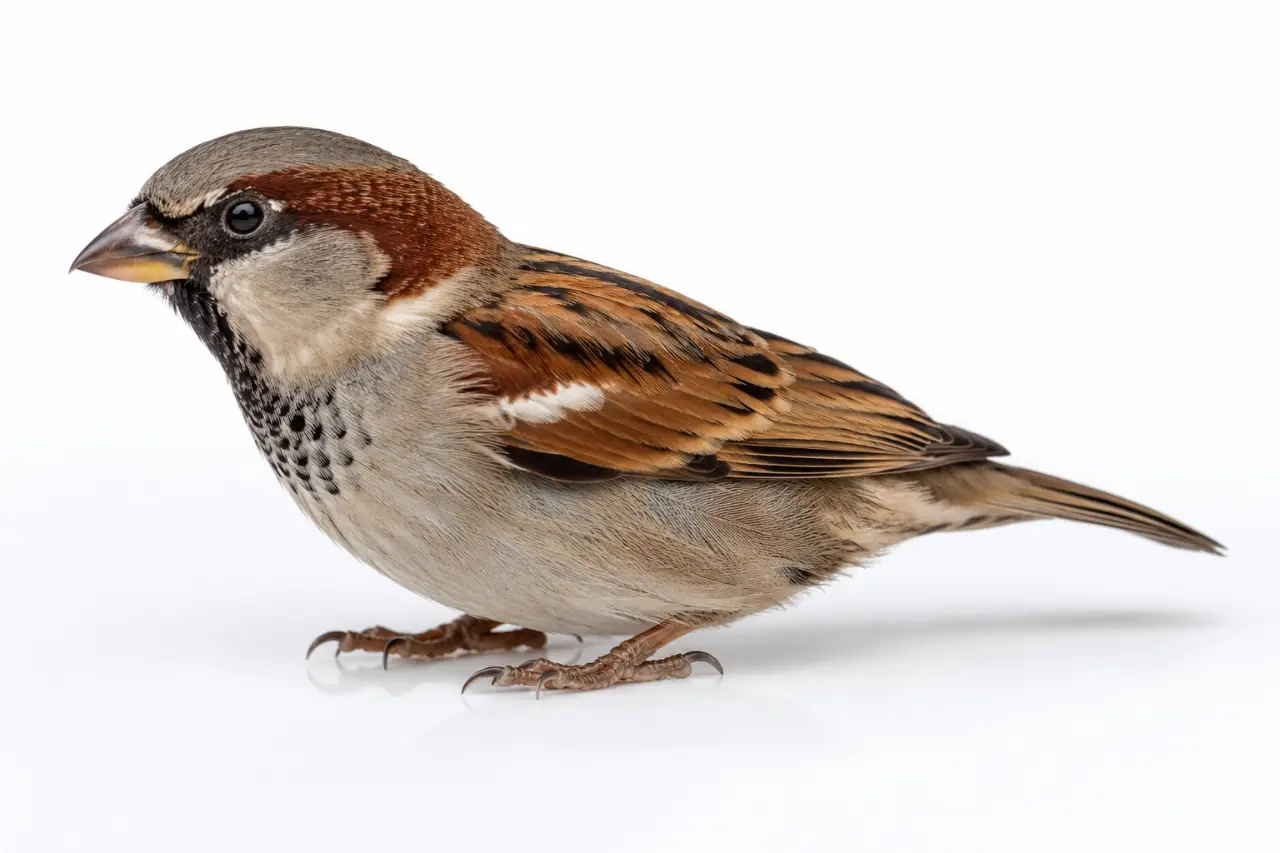
Small, stocky bird 14–16cm; males have chestnut brown upperparts, grey cap, and black bib; females are streaked brown and buff with a pale eye stripe. Highly gregarious — typically found in flocks.
Seeds, grains, bread crumbs, and insect larvae — highly dependent on human food waste in urban environments
Fast — 3–4 broods of 4–5 eggs per year; breeds from March through August
Summer
Spring
Fall
Winter
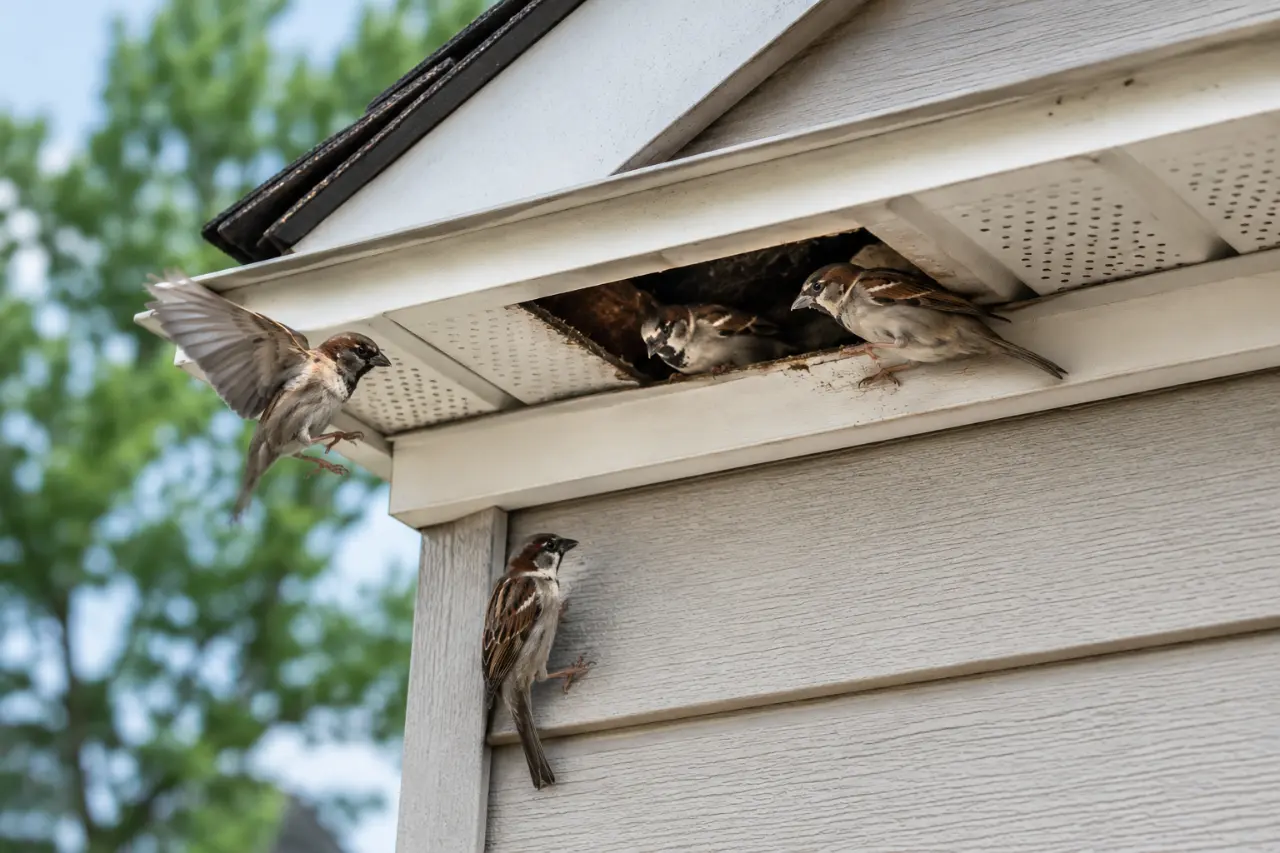
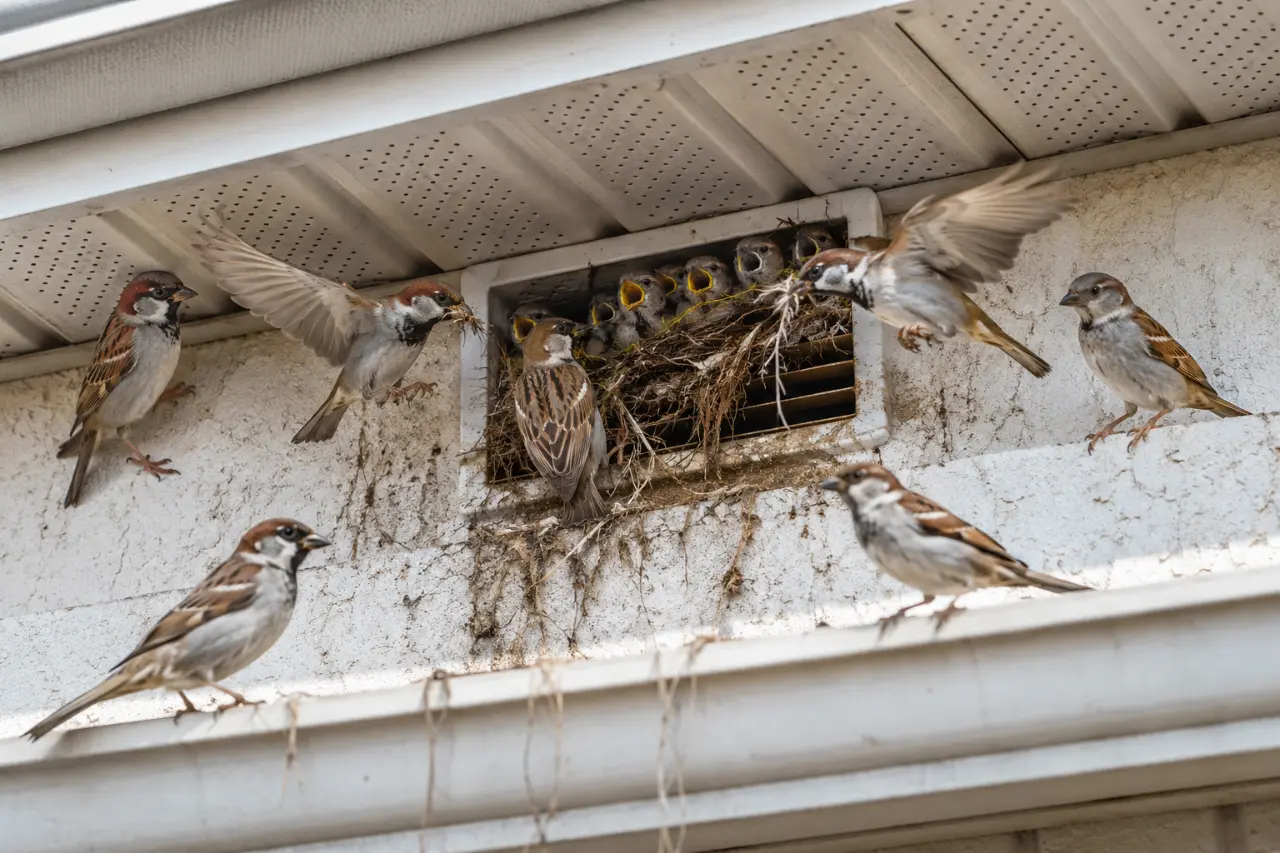
House Sparrows are not protected under the Migratory Birds Convention Act in Canada, unlike most other bird species. This allows for a broader range of management options than seagull or pigeon management, including nest removal at any stage of the breeding cycle.
Inspect your building exterior for gaps larger than 25mm around soffits, signs, vents, and structural joints each spring before the breeding season begins. Sparrows can establish a nest within 48 hours of identifying a suitable cavity.
Physical Exclusion, Nest Removal & Entry Point Sealing (No permit required)
Removing nests without sealing the entry point results in immediate re-nesting. Incorrectly installed exclusion materials can trap birds inside cavities, creating welfare issues and significant odour problems from decomposition.
RainCity removes existing nests, seals all identified entry points with appropriate materials, and installs deterrents at secondary roosting sites to achieve complete and lasting exclusion from affected structures.
Full building exterior inspection, nest removal, professional sealing of all entry points with appropriate exclusion materials, and deterrent installation at remaining roosting surfaces.
Nest removal and entry point exclusion completed in a single visit; follow-up inspection recommended after 2–4 weeks to confirm no new entry points have been utilised.
Signs of Activity
Early detection prevents small issues from becoming full infestations. Watch for signs in hidden or undisturbed areas.
Nesting Material Visible in Gaps
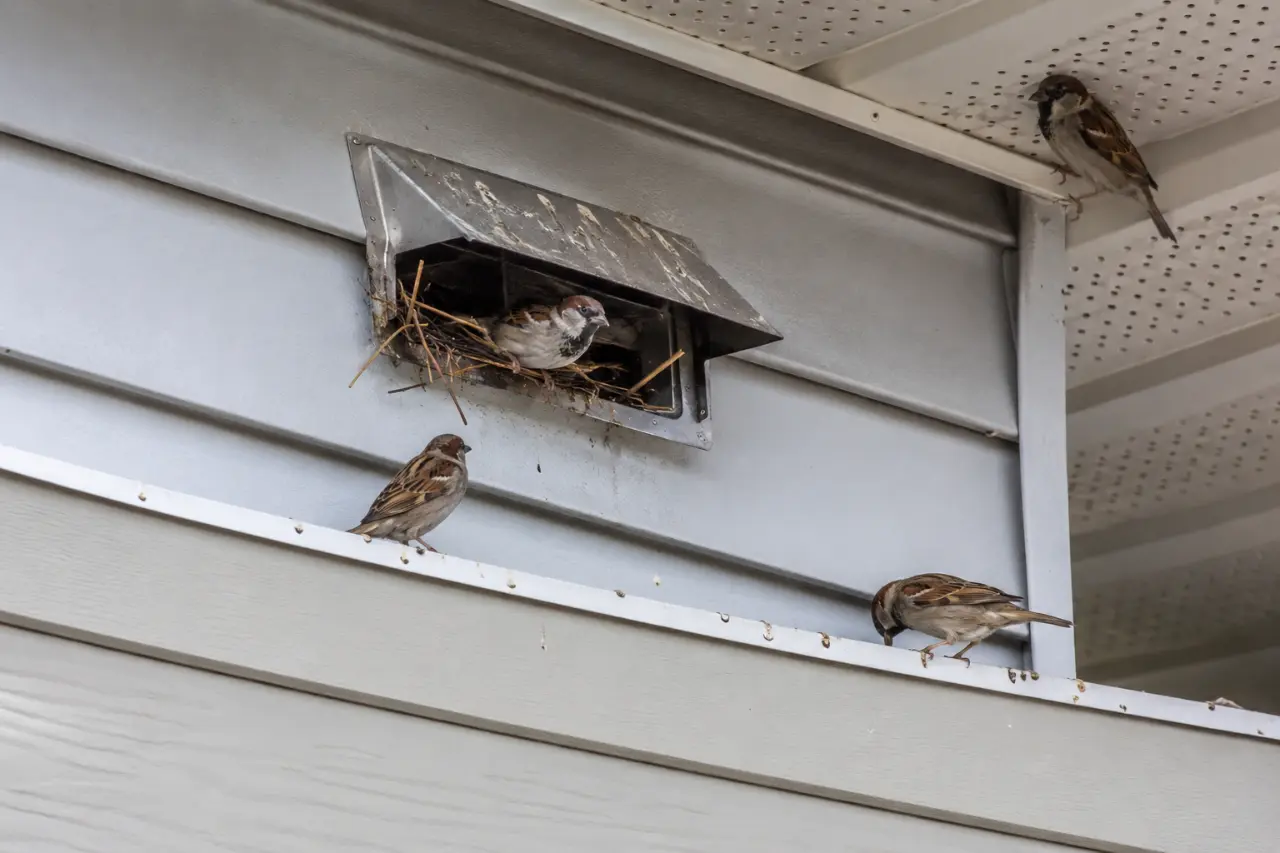
Dry grass, feathers, and debris protruding from gaps in soffits, behind signage, in ventilation louvres, and around structural joints — the most visible sign of active sparrow nesting.
Chirping from Inside Building Voids
Persistent chirping, scratching, and rustling sounds coming from inside soffits, roof spaces, wall voids, or above suspended ceilings where sparrows have established nests.
Droppings Beneath Entry Points
Streaks and accumulations of white droppings on walls and surfaces directly below gaps where sparrows regularly enter and exit a nesting cavity.
Birds Entering Building Gaps
Repeated observation of sparrows flying directly into a specific gap in the building envelope — a definitive sign of an established nest inside that cavity.
Flocks Roosting on Signage
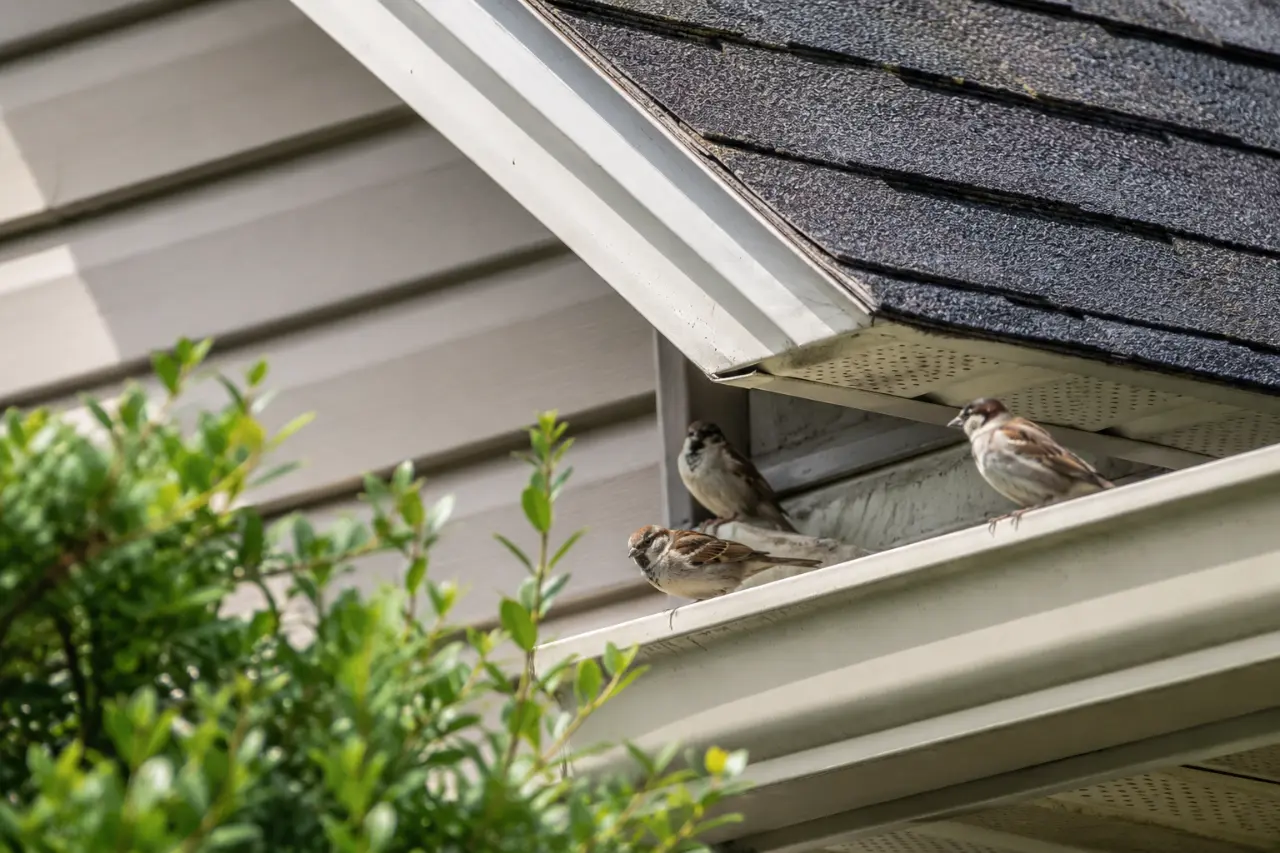
Groups of sparrows roosting on the tops and backs of illuminated signs, gutters, and ledges — producing heavy droppings that damage sign faces and building facades below.
Frequently Asked Questions
Find expert answers to our most common questions and discover how we keep your home or business pest-free.
No. The House Sparrow is an introduced species and is not protected under the federal Migratory Birds Convention Act in Canada. This means nests, eggs, and birds can be managed without a federal permit, unlike most native bird species.
Yes. Dry nesting material accumulated near light fixtures, electrical junction boxes, and wiring is a genuine fire hazard. This is a particular concern in commercial buildings where sparrows nest inside roof spaces and above suspended ceilings.
Very quickly. A pair of House Sparrows can construct a functional nest within 48 hours of identifying a suitable cavity. Once established, the same site will be used for multiple broods throughout the season and returned to in subsequent years.
Sparrows have strong site fidelity. Removing a nest without sealing the entry point will result in immediate re-nesting. The cavity must be physically sealed with appropriate materials to prevent re-use.
Yes — and this is a serious food safety compliance issue. Sparrows nesting or foraging inside food storage and preparation areas contaminate products and surfaces with droppings that carry Salmonella. BC food safety regulations require pest control measures that prevent bird access to food handling areas.
Ready to Get Rid of Sparrows?
Let our professional team protect your home or business with proven solutions that work.
Schedule an inspection
- Local, licensed & Insured
- Fast Response & Reliable Service
- Satisfaction Guaranteed