

Pigeons
Columba livia domestica (Feral Pigeon)
Roosting urban birds whose acidic droppings corrode structures, block drainage systems, and harbour serious pathogens.
"Your pest problem
is our business"
is our business"
- RainCity Pest Control -
Pest problems in Pigeons? Raincity can help!
Proudly Canadian
Pet Friendly

Pigeons
Overview
Urban roosting pigeons cause significant property damage through acidic droppings and nesting debris, while posing real health risks to building occupants and maintenance workers.
More Than a Nuisance — A Genuine Health and Property Risk
Pigeons are the most problematic urban bird pest in the Lower Mainland, with populations concentrated around commercial districts, transit hubs, and residential rooftops. A single pigeon produces up to 12kg of droppings per year — highly acidic waste that corrodes stone, concrete, metal, and paintwork. Nesting pigeons block gutters, ventilation systems, and drainage channels, leading to costly water damage. Their droppings and nesting material also harbour a range of fungal and bacterial pathogens that pose a genuine risk to human health.
Get a free Quote. Give us a call.
236.521.8668


Raincity
Risk Index
Our Risk Index breaks down each pest's threat level so you know exactly what you're dealing with and how urgently to act.
Risks: Pigeons
Property
Damage
8 / 10
Nuisance
Level
8 / 10
Health
Threat
7 / 10Structural & Material
Noise & Disruption
Bite & Disease Exposure
What This Means For You
Pigeon droppings are highly acidic and corrode stone, concrete, metal roofing, and solar panels. Nesting material blocks gutters, downspouts, and ventilation systems, leading to water ingress and HVAC damage.
Droppings on building entrances, vehicles, signage, and outdoor seating create a persistent cleaning burden and damage the professional appearance of commercial properties. Cooing and roosting noise is disruptive in residential settings.
Pigeon droppings harbour Cryptococcus, Histoplasma, and Salmonella. Dried droppings become airborne and can cause Histoplasmosis and Psittacosis when inhaled. Nesting material also carries bird mites that can infest buildings.
Know Your Pest
Pigeons Knowledge, Prevention Tips & Home Protection Advice.
Facts: Pigeons
Stocky body 29–37cm; grey plumage with iridescent green and purple neck feathers; two dark wing bars; red feet. Highly variable colouration in urban populations ranging from white to black.
Grains, seeds, bread, and discarded human food waste
Fast — breeds year-round in BC; pairs produce 4–6 broods of 2 squabs per year
Summer
Spring
Fall
Winter
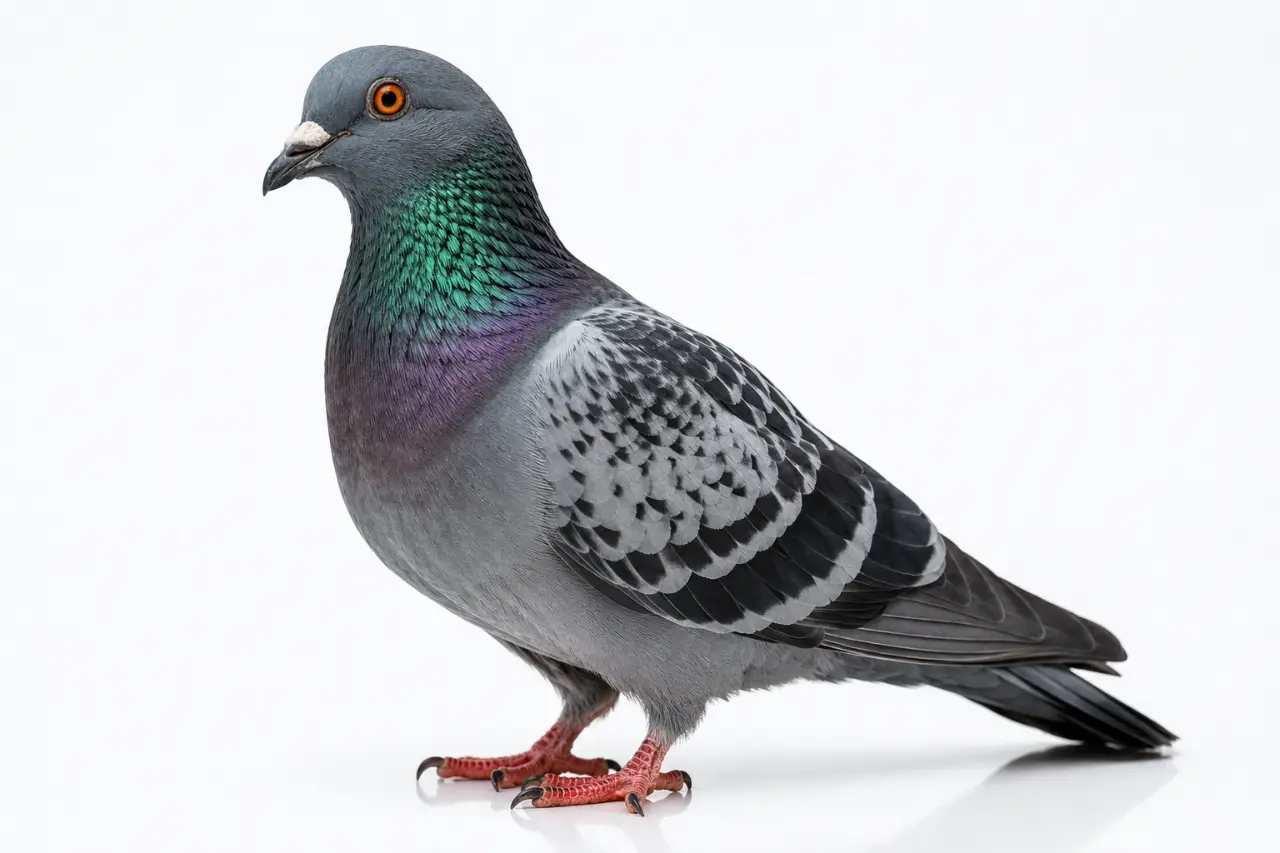
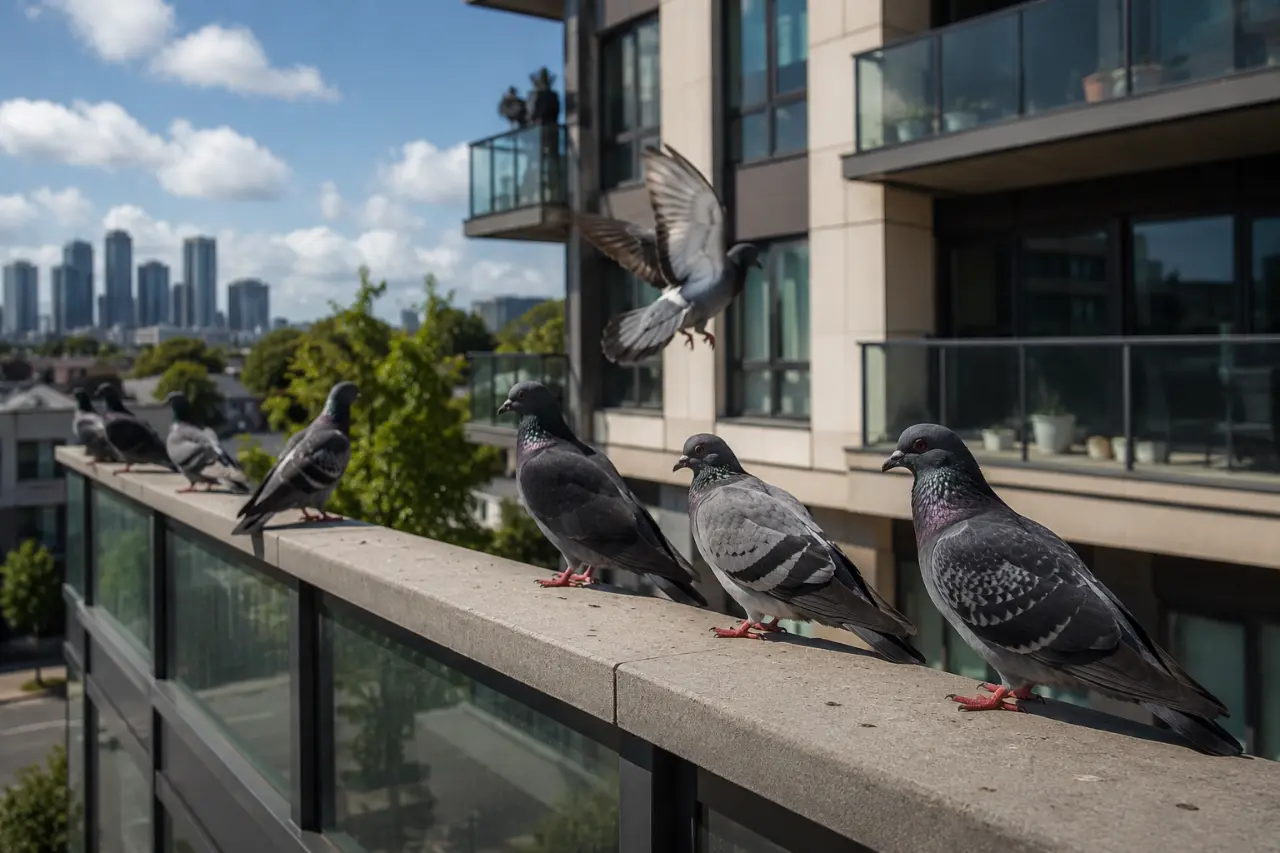
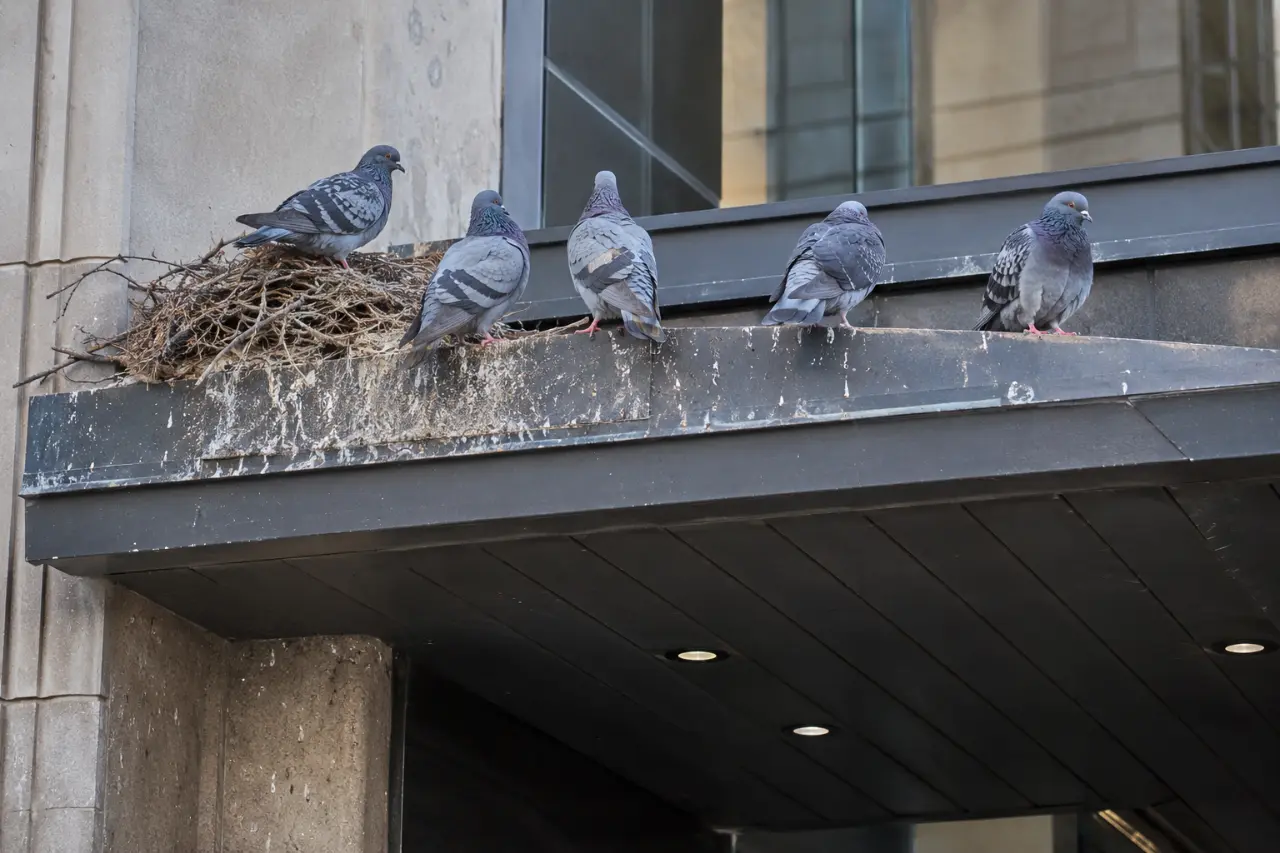
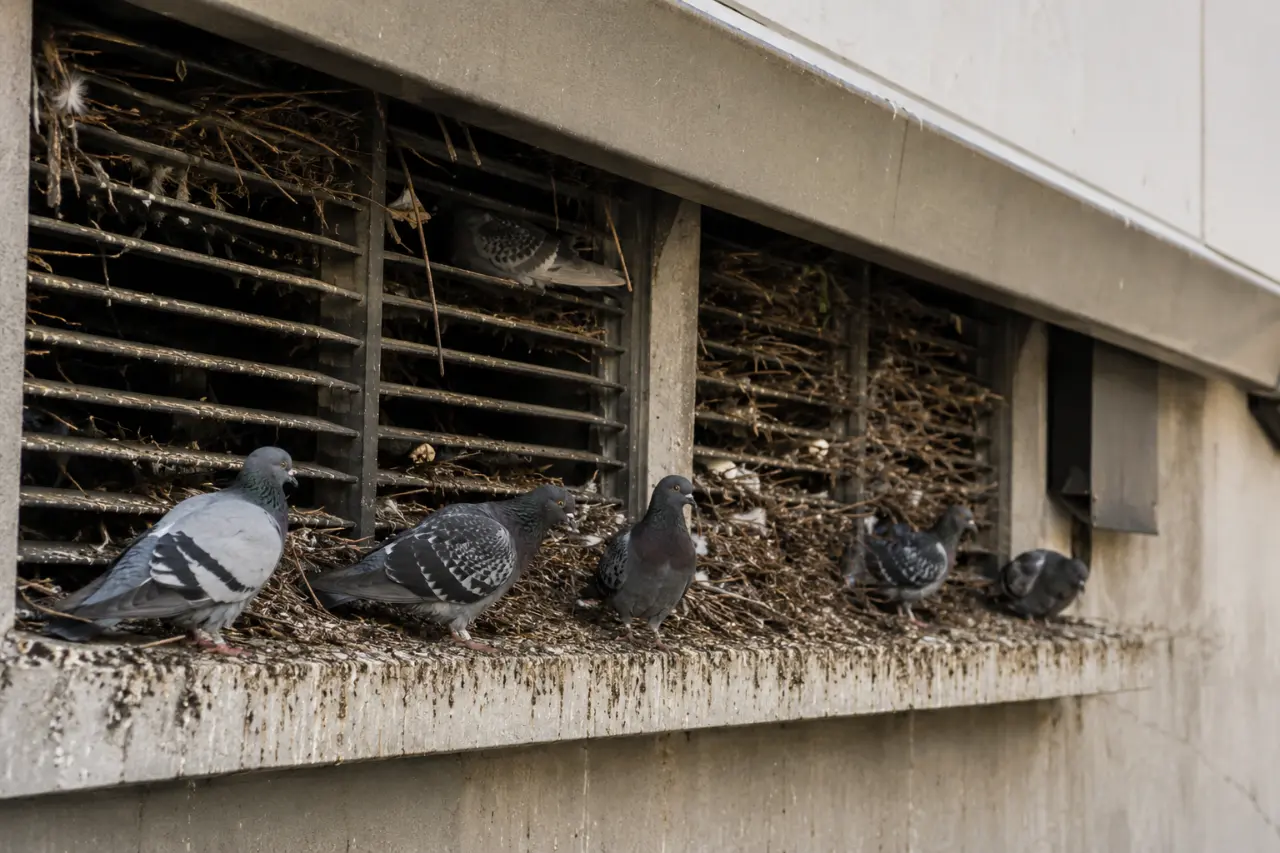
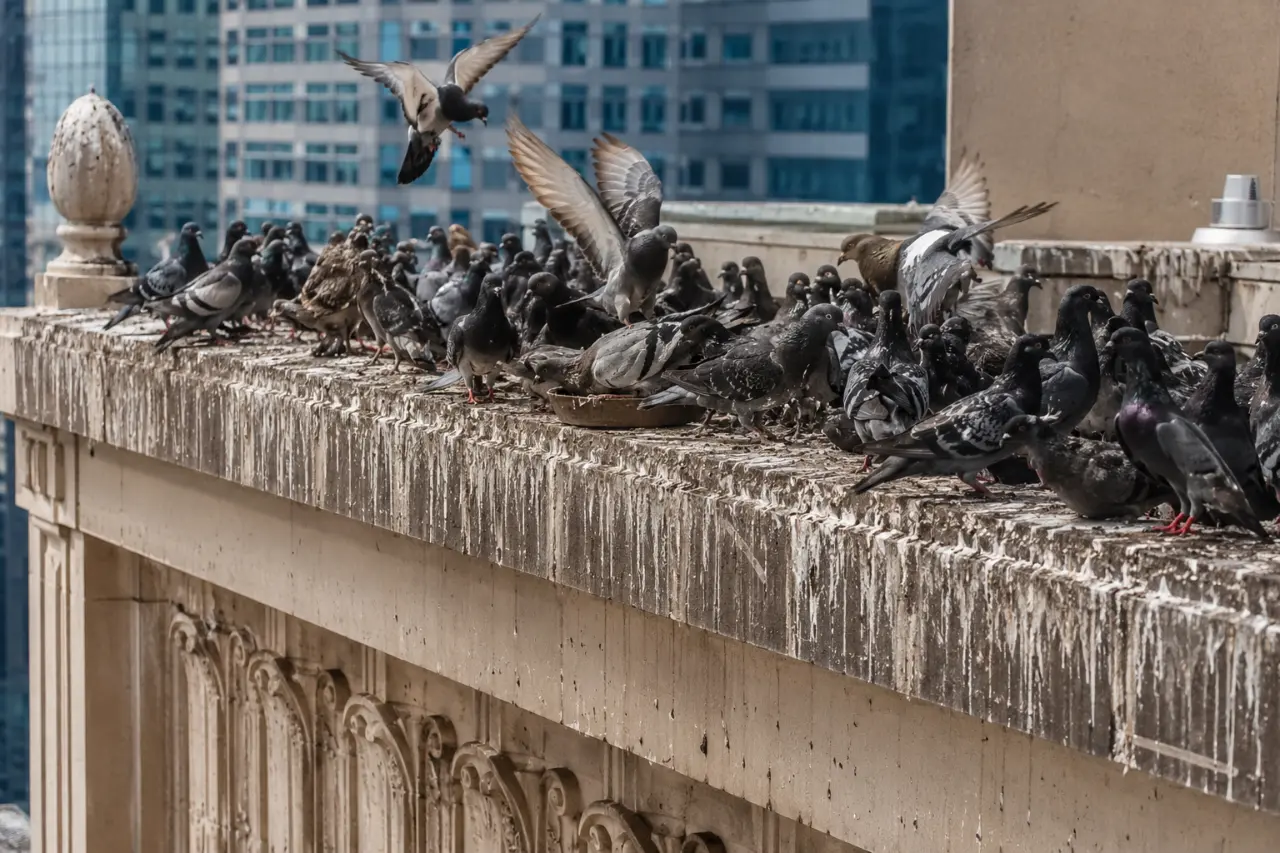
Pigeons are creatures of habit and return to the same roosting and nesting sites for years. Removing birds without installing deterrents results in immediate re-colonisation. Effective management requires physical exclusion — not just dispersal.
Never feed pigeons — even unintentionally through accessible waste bins or spilled bird seed. Remove nesting material promptly and block access to ledges, soffits, and rooftop equipment before birds establish a roosting habit. Prevention is far more cost-effective than remediation.
Physical Exclusion & Deterrent Installation (Humane, no chemicals required)
Consumer deterrents such as plastic owls and reflective tape are ineffective within days as pigeons habituate to static deterrents. Improper installation of spikes or netting can trap birds and create welfare and liability issues.
RainCity installs professional-grade bird spikes, tensioned wire systems, and anti-roosting nets tailored to your specific building architecture, providing long-term exclusion without harming birds.
Site assessment and professional installation of stainless steel bird spikes, tensioned wire deterrent systems, or exclusion netting depending on roosting location and building type.
Physical deterrent installation completed in a single visit; effectiveness is immediate and long-lasting when correctly specified for the roosting behaviour.
Signs of Activity
Early detection prevents small issues from becoming full infestations. Watch for signs in hidden or undisturbed areas.
Droppings on Ledges and Entrances
Accumulations of white and grey droppings on window ledges, rooftop equipment, building entrances, signage, and parked vehicles directly below roosting sites.
Nesting Material in Gutters
Twigs, feathers, and debris accumulating in gutters, downspouts, air vents, and behind rooftop equipment — blocking drainage and creating fire hazards near HVAC units.
Constant Roosting at Specific Points
Groups of pigeons repeatedly occupying the same ledges, parapet walls, rooftop edges, or window sills at predictable times of day — a clear sign of an established roosting habit.
Bird Mite Activity Indoors
Tiny, fast-moving mites appearing on window frames and interior walls adjacent to pigeon nesting sites — bird mites migrate into buildings when nest temperatures rise or chicks fledge.
Cooing and Scratching Sounds
Persistent cooing, wing flapping, and scratching sounds from roof spaces, soffits, or above suspended ceilings where pigeons have gained access to nest.
Frequently Asked Questions
Find expert answers to our most common questions and discover how we keep your home or business pest-free.
Yes. Dried pigeon droppings can contain Histoplasma fungal spores and Salmonella bacteria. Cleaning should always be done with appropriate respiratory protection (P100 respirator), gloves, and disposable coveralls. Large accumulations should be handled by a professional remediation service.
Removing food sources helps discourage new birds but will not move an established roost. Pigeons have strong site fidelity and will return to the same roosting location for years regardless of food availability nearby. Physical exclusion is required to move them permanently.
Yes. Properly installed bird spikes do not harm birds — they simply make ledges and surfaces uncomfortable to land on, redirecting pigeons to other locations. They are the most widely recommended humane deterrent by bird management professionals.
Yes. Pigeons can access roof spaces through damaged soffits, open ridge tiles, and ventilation gaps. Nesting inside a roof space causes significant mess, blocks ventilation, and introduces bird mites that can migrate into living areas.
Pigeon droppings have a pH of around 3–4.5 — similar to vinegar. Over time they corrode metal roofing, concrete, stonework, and painted surfaces. Solar panels covered in droppings lose significant efficiency. The long-term remediation cost far exceeds the cost of professional deterrent installation.
Ready to Get Rid of Pigeons?
Let our professional team protect your home or business with proven solutions that work.
Schedule an inspection
- Local, licensed & Insured
- Fast Response & Reliable Service
- Satisfaction Guaranteed