

Moths
Clothes Moth: Tineola bisselliella / Pantry Moth: Plodia interpunctella
Fabric and pantry pests whose larvae silently destroy clothing, textiles, and dry food stores before they are ever noticed.
"Your pest problem
is our business"
is our business"
- RainCity Pest Control -
Pest problems in Moths? Raincity can help!
Proudly Canadian
Pet Friendly

Moths
Overview
Fabric and pantry moths cause irreversible damage to wool, cashmere, silk, and stored food. Larvae are the destructive stage — adult moths are just a visible warning sign.
It’s Not the Moth — It’s the Larvae You Can’t See
When homeowners spot moths in their home, the instinct is to swat the adult. But adult moths do not eat — it is their larvae that cause all the damage. Clothes moth larvae tunnel through natural-fibre garments and textiles, while pantry moth larvae contaminate entire dry goods stores with webbing and frass. By the time damage is visible, an infestation is typically well-established and requires systematic treatment to fully eliminate.
Get a free Quote. Give us a call.
236.521.8668


Raincity
Risk Index
Our Risk Index breaks down each pest's threat level so you know exactly what you're dealing with and how urgently to act.
Risks: Moths
Property
Damage
7 / 10
Nuisance
Level
6 / 10
Health
Threat
2 / 10Structural & Material
Noise & Disruption
Bite & Disease Exposure
What This Means For You
Clothes moth larvae cause irreversible damage to wool, cashmere, silk, and fur. A single infestation can destroy an entire wardrobe. Pantry moths contaminate and ruin significant quantities of dry goods.
Discovering damaged clothing or contaminated pantry goods is deeply frustrating. The process of checking and isolating every item in an affected wardrobe or pantry is highly time-consuming.
Moths pose no direct health risk. Pantry moth larvae and webbing contaminate food and make it unfit for consumption. Some individuals experience mild allergic reactions to moth scales.
Know Your Pest
Moths Knowledge, Prevention Tips & Home Protection Advice.
Facts: Moths
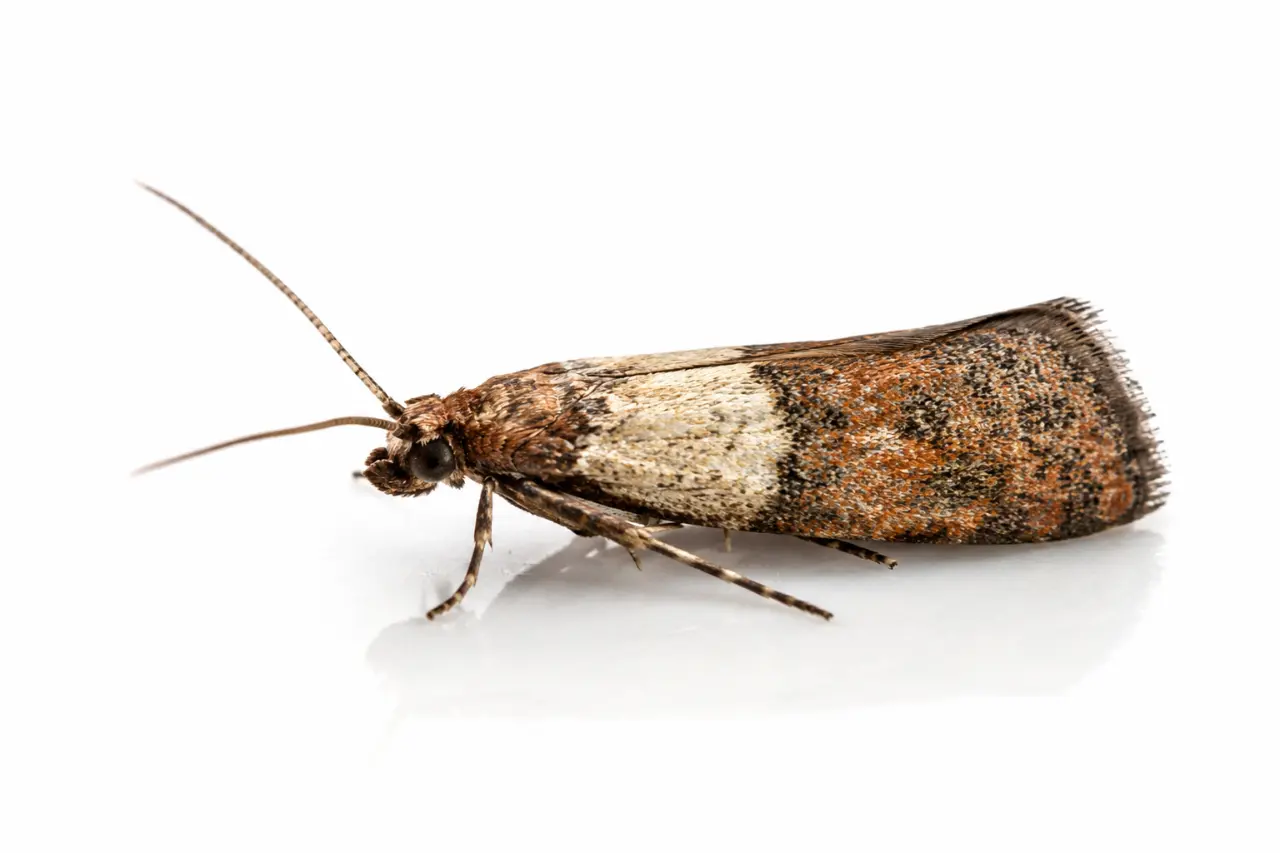
Clothes Moth: small (6–8mm), golden-buff coloured, avoids light. Pantry Moth: 8–10mm, distinctive copper/grey wing pattern. Both fly in an erratic, fluttery pattern.
Clothes Moth larvae: keratin in wool, cashmere, silk, fur. Pantry Moth larvae: grains, cereals, dried fruit, nuts, spices
Moderate — larvae develop over 2–30 months depending on temperature; adults live 1–4 weeks
Summer
Spring
Fall
Winter

Clothes moths actively avoid light — infestations often originate in seldom-disturbed areas such as the back of wardrobes, under furniture, and in stored seasonal clothing. A garment stored in a dark box for six months can be completely destroyed before the damage is noticed.
Always dry-clean or launder natural-fibre garments before storing them — moth larvae are attracted to perspiration and body oils on fabric. Store seasonal clothing in sealed bags or cedar-lined containers.
Pheromone Trapping, Residual Treatment & Wardrobe Heat Treatment (Safe for home use)
Moth balls are largely ineffective at the concentrations safe for home use and do not eliminate larvae already inside garments. Cedar has a repellent effect only on early-stage larvae and does not kill an established infestation.
RainCity combines pheromone monitoring traps to identify species and activity level, targeted residual treatment of affected areas, and professional advice on isolation and disposal of heavily infested items.
Pheromone trap deployment, targeted residual insecticide to harbourage areas, and client-guided sorting, isolation, and disposal of infested materials.
Active infestation brought under control within 4–6 weeks with concurrent diligent client preparation; full elimination requires systematic wardrobe and pantry management.
Signs of Activity
Early detection prevents small issues from becoming full infestations. Watch for signs in hidden or undisturbed areas.
Irregular Holes in Clothing
Small, irregular holes in natural-fibre garments — particularly wool, cashmere, and silk — often found in areas of contact such as collars, cuffs, and armpits where body oils concentrate.
Webbing or Silken Tubes
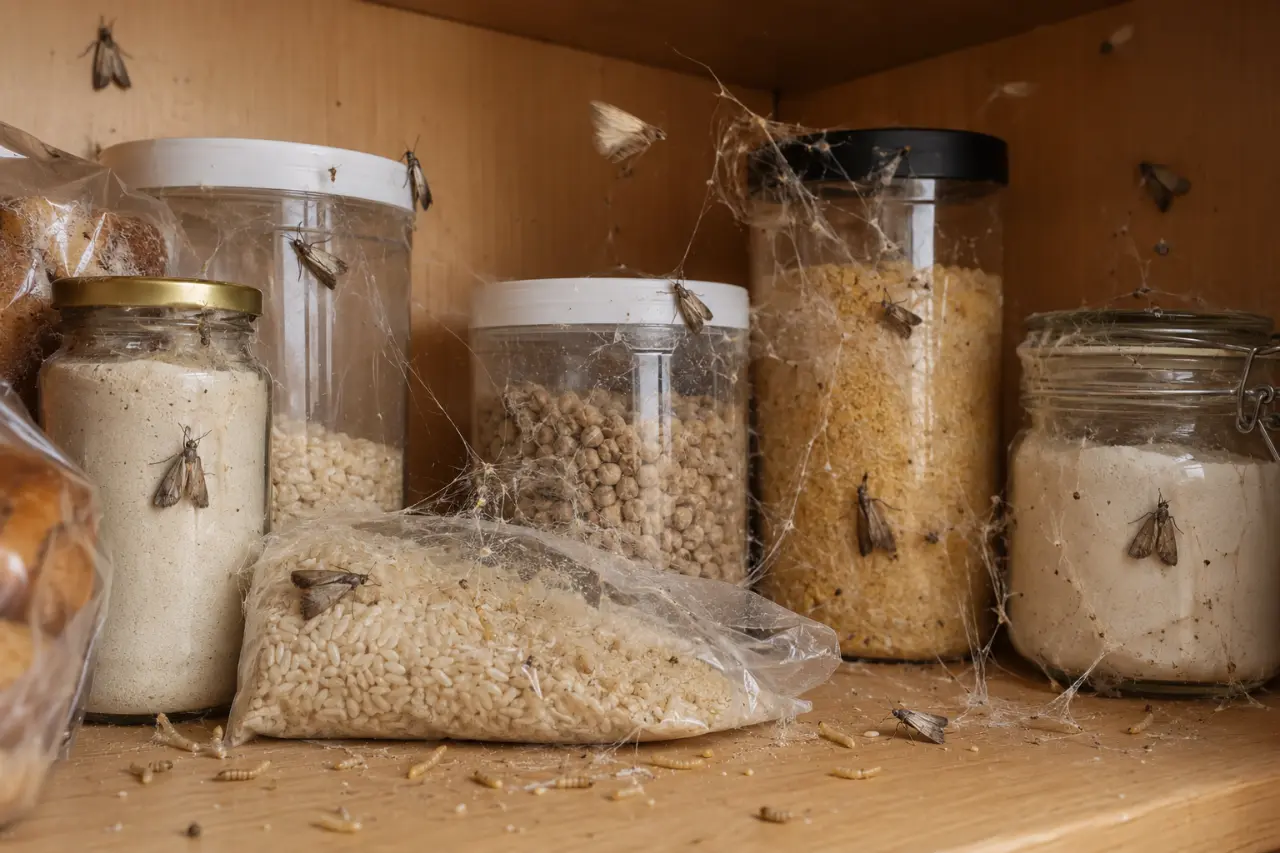
Fine silken webbing or small tubes on the surface of garments, carpet, or inside pantry packets — spun by larvae as protective casings while they feed.
Pantry Webbing and Frass
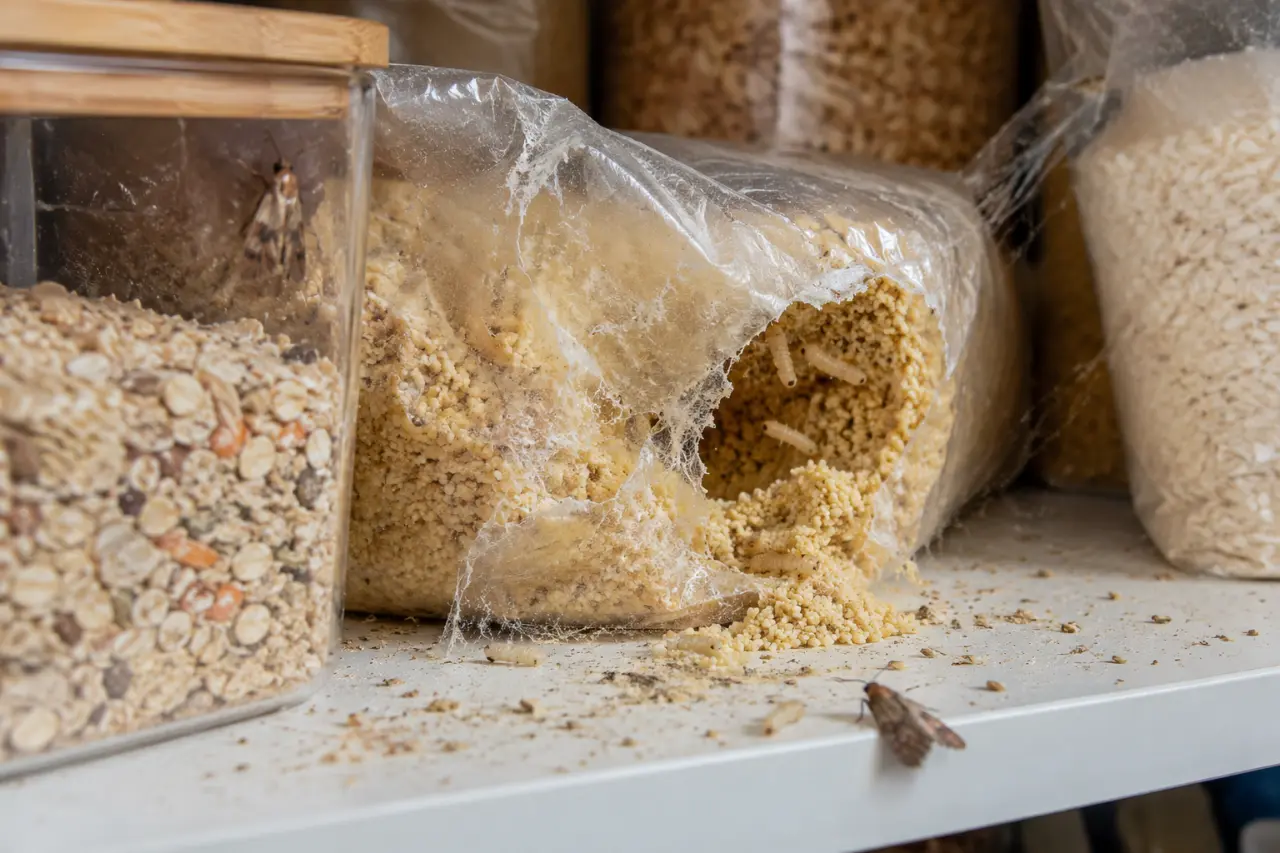
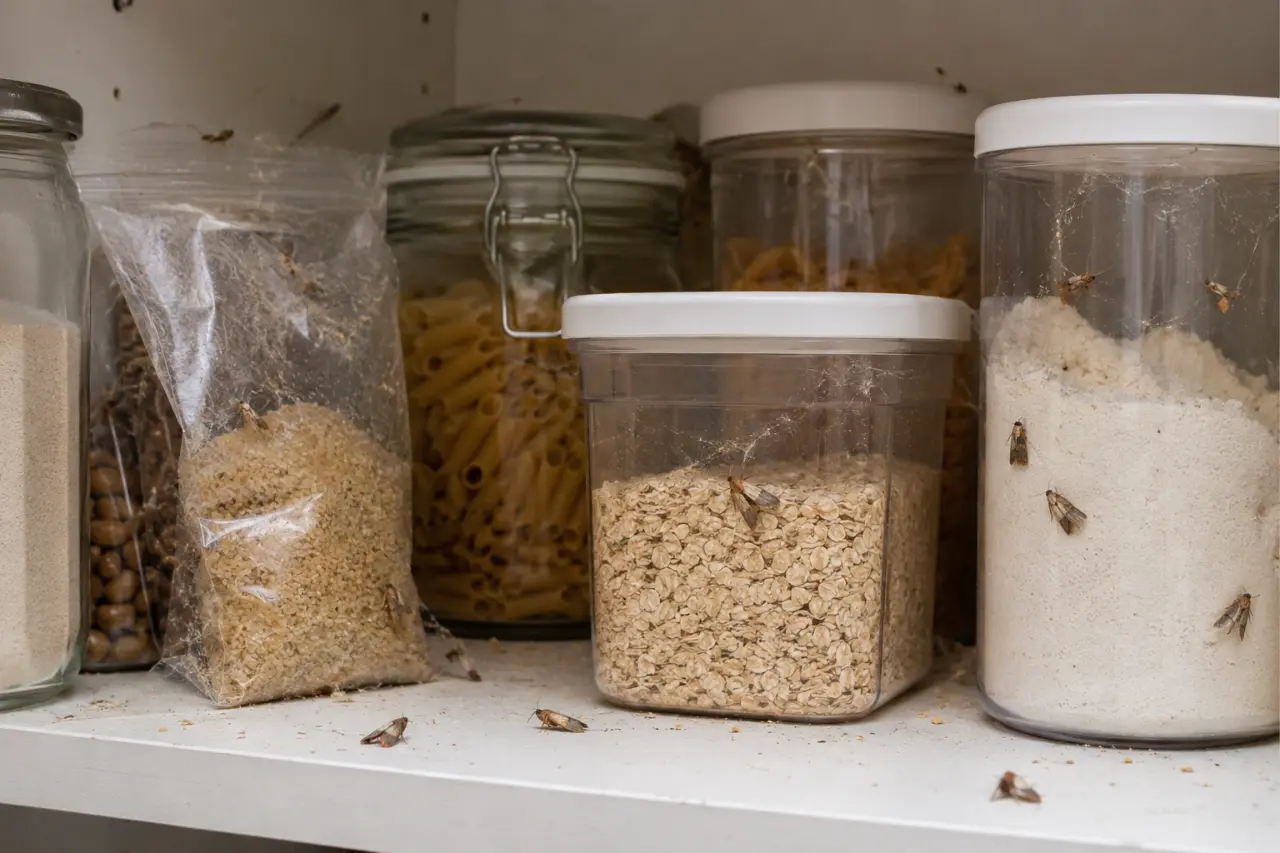
Fine webbing, small larvae, or granular frass inside dry food packaging — cereals, flour, nuts, dried fruit, and spices are all susceptible to pantry moth larvae.
Adult Moths Flying
Small moths flying in an erratic pattern near wardrobes, food cupboards, or carpeted areas. Clothes moths actively avoid light and tend to run rather than fly when disturbed.
Carpet Damage Along Edges
Thinning, bare patches, or damage along the edges of wool carpets, particularly under furniture and in undisturbed corners where larvae feed undisturbed.
Frequently Asked Questions
Find expert answers to our most common questions and discover how we keep your home or business pest-free.
No. Clothes moths feed exclusively on keratin — the protein found in natural animal fibres such as wool, cashmere, silk, fur, and feathers. Synthetic fabrics like polyester and nylon are not at risk, though blends with natural fibres can still be damaged.
Pantry moths are often introduced inside infested products purchased from the store. Eggs and early-stage larvae are microscopic and can be present in grains, flour, and dried goods at the point of purchase.
Fresh cedar emits oils that repel early-stage larvae, but the effect fades within months and cedar has no impact on established infestations or eggs already present in garments. It is a preventative supplement, not a treatment.
Heavily infested items should be sealed in plastic bags and disposed of, or professionally dry-cleaned. Items you wish to keep can be treated by placing them in a freezer at -18°C for at least 72 hours to kill all life stages.
Store all dry goods — grains, cereals, flour, nuts, and spices — in airtight glass or hard plastic containers. Inspect new groceries before storing them, and regularly clean pantry shelves to remove crumbs and debris.
Moths pose no direct health risk. Pantry moth-contaminated food should be discarded as it may contain larvae, frass, and webbing, but accidental consumption is not medically dangerous to healthy adults.
Ready to Get Rid of Moths?
Let our professional team protect your home or business with proven solutions that work.
Schedule an inspection
- Local, licensed & Insured
- Fast Response & Reliable Service
- Satisfaction Guaranteed