

Crows
Corvus brachyrhynchos (American Crow)
Highly intelligent urban roosting birds that create serious noise, droppings, and territorial aggression issues across BC's Lower Mainland.
"Your pest problem
is our business"
is our business"
- RainCity Pest Control -
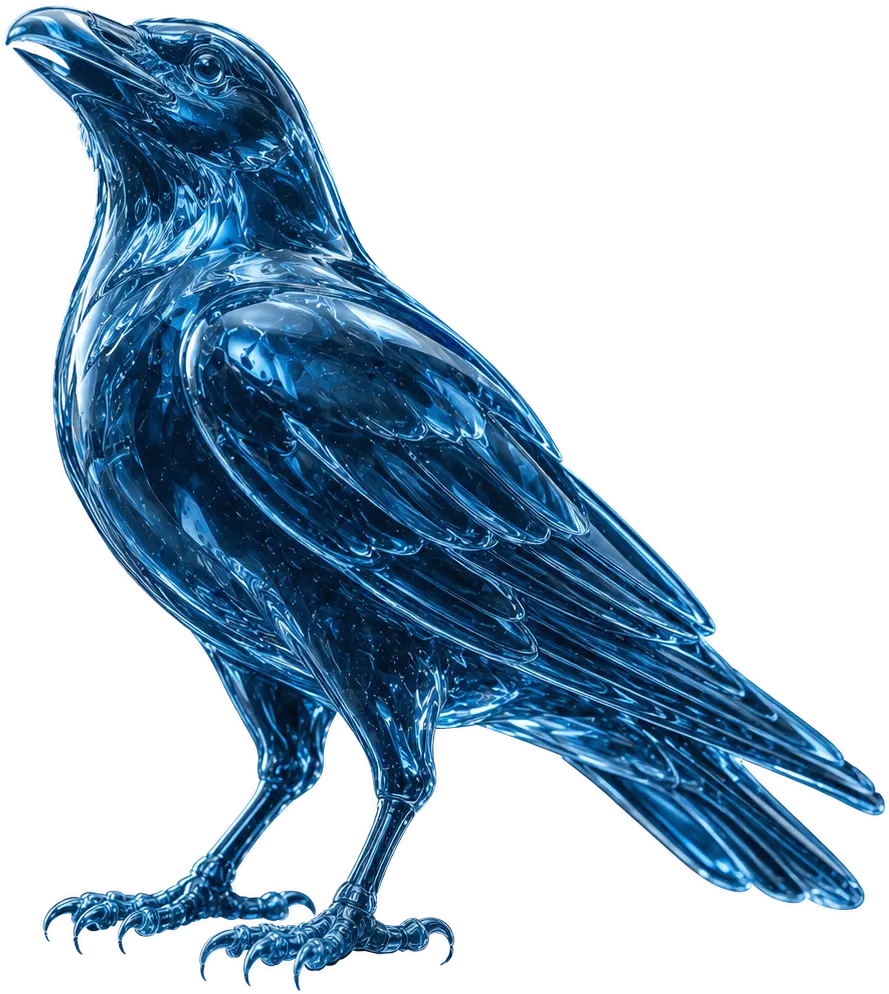
Pest problems in Crows? Raincity can help!
Proudly Canadian
Pet Friendly

Crows
Overview
Highly intelligent and social birds that form large urban roosts, damage property, and become aggressively territorial during nesting season across the Lower Mainland.
Among the Smartest — and Most Persistent — Urban Pests
The American Crow is one of the most intelligent bird species in the world, and BC’s urban crow populations have learned to exploit human environments with remarkable sophistication. Greater Vancouver hosts one of the largest crow roosts in North America, with tens of thousands of birds congregating in urban areas each evening. While individual crows are fascinating, large roosting populations create significant problems — substantial volumes of droppings, intense noise, aggressive dive-bombing during nesting season, and damage to rooftop materials. Their intelligence makes deterrence challenging and requires professional specification.
Get a free Quote. Give us a call.
236.521.8668


Raincity
Risk Index
Our Risk Index breaks down each pest's threat level so you know exactly what you're dealing with and how urgently to act.
Risks: Crows
Property
Damage
6 / 10
Nuisance
Level
8 / 10
Health
Threat
5 / 10Structural & Material
Noise & Disruption
Bite & Disease Exposure
What This Means For You
Large crow roosts produce significant volumes of droppings that corrode roofing, damage vehicles, and create slip hazards on walkways and car parks. Nesting crows pull at roofing materials and block gutters with nesting debris.
Large roosting flocks create extreme noise at dawn and dusk. During nesting season (April–July) crows aggressively dive-bomb people near nest sites. Droppings on vehicles, entrances, and outdoor areas require constant cleaning.
Crow droppings and feathers can carry Salmonella, West Nile virus, and Histoplasma. Large roost accumulations create airborne health risks when disturbed. Crows can also carry and spread avian influenza.
Know Your Pest
Crows Knowledge, Prevention Tips & Home Protection Advice.
Facts: Crows
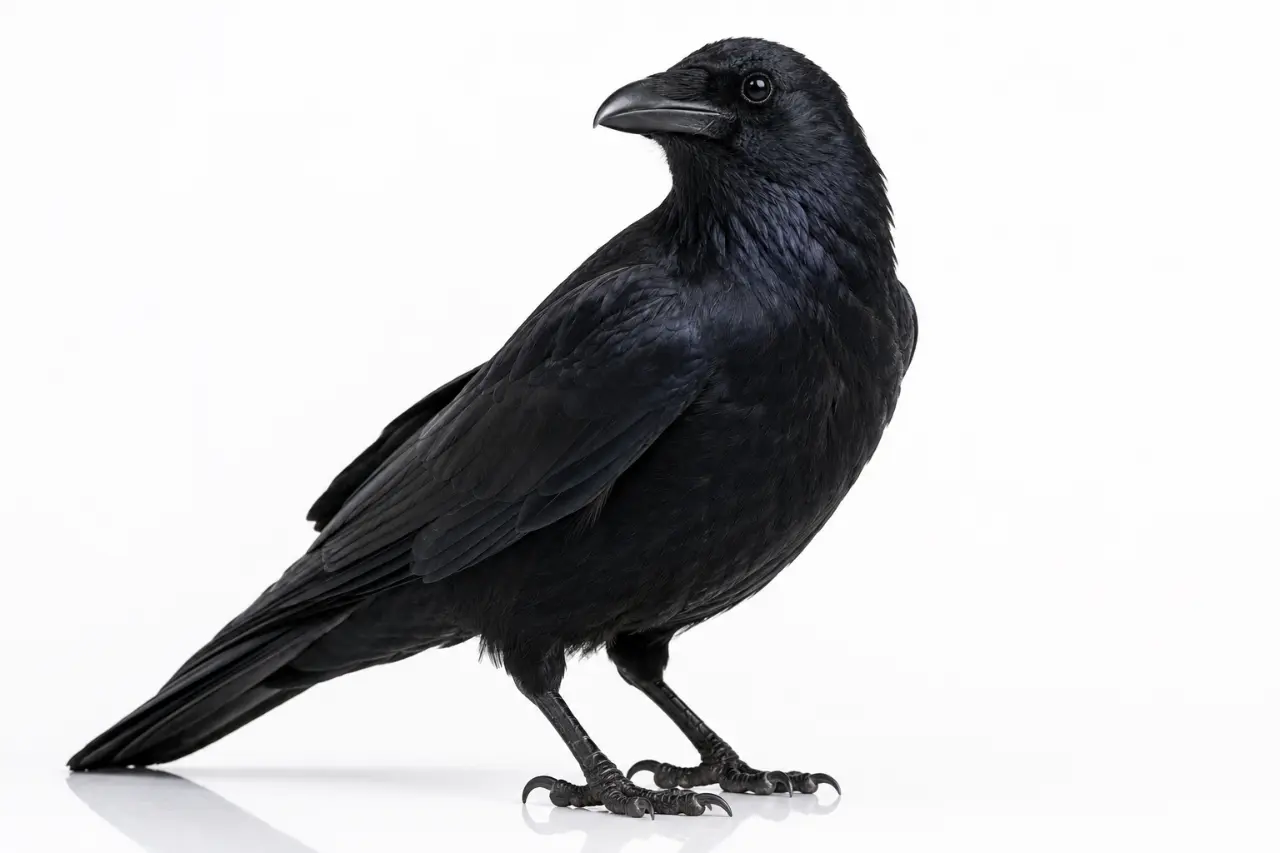
All-black plumage including bill, legs, and eyes; 40–50cm body length; fan-shaped tail; powerful bill. Loud, distinctive cawing call. Highly social — rarely seen alone outside nesting season.
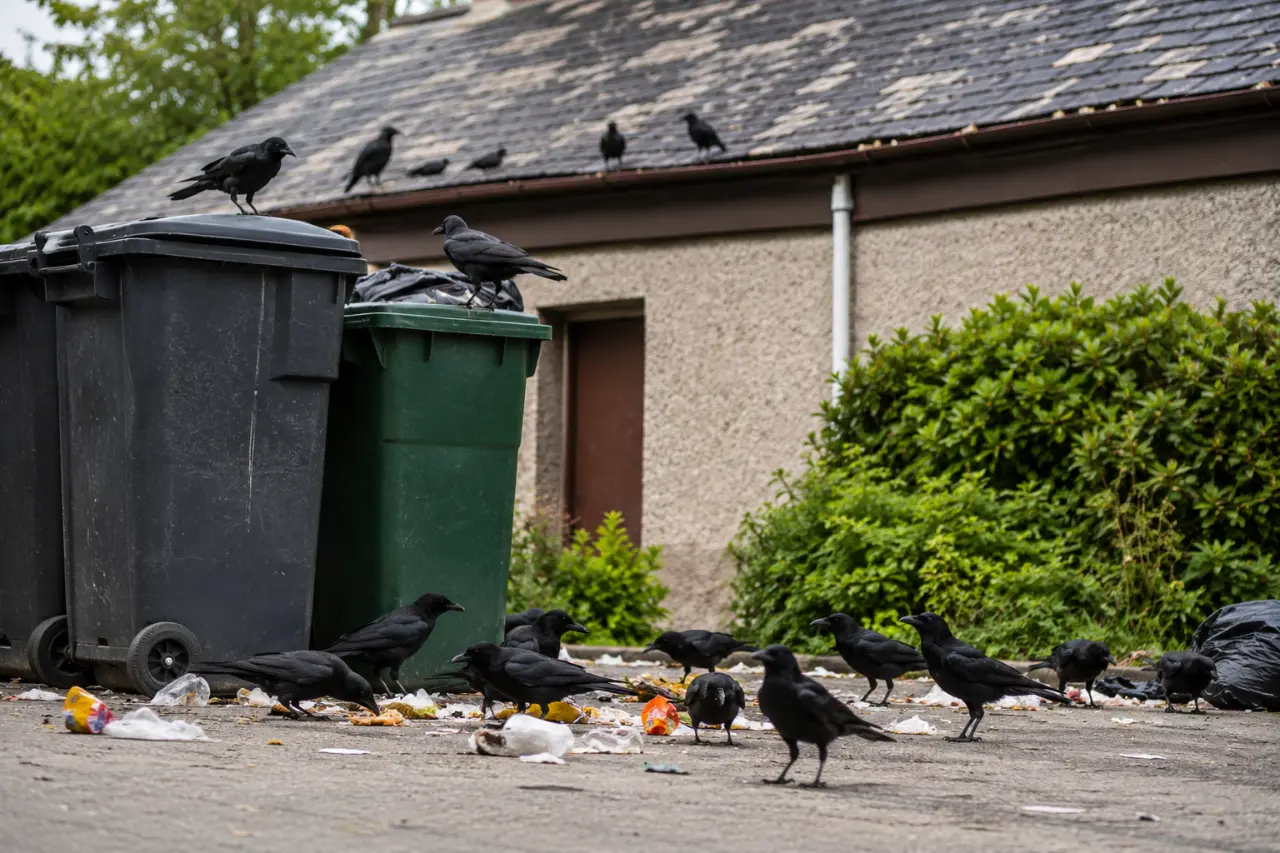
Highly omnivorous — insects, small animals, eggs, carrion, garbage, fruit, and any accessible human food waste
One brood of 3–6 eggs per year; nesting April–July; strong pair bond and nest site fidelity
Summer
Spring
Fall
Winter
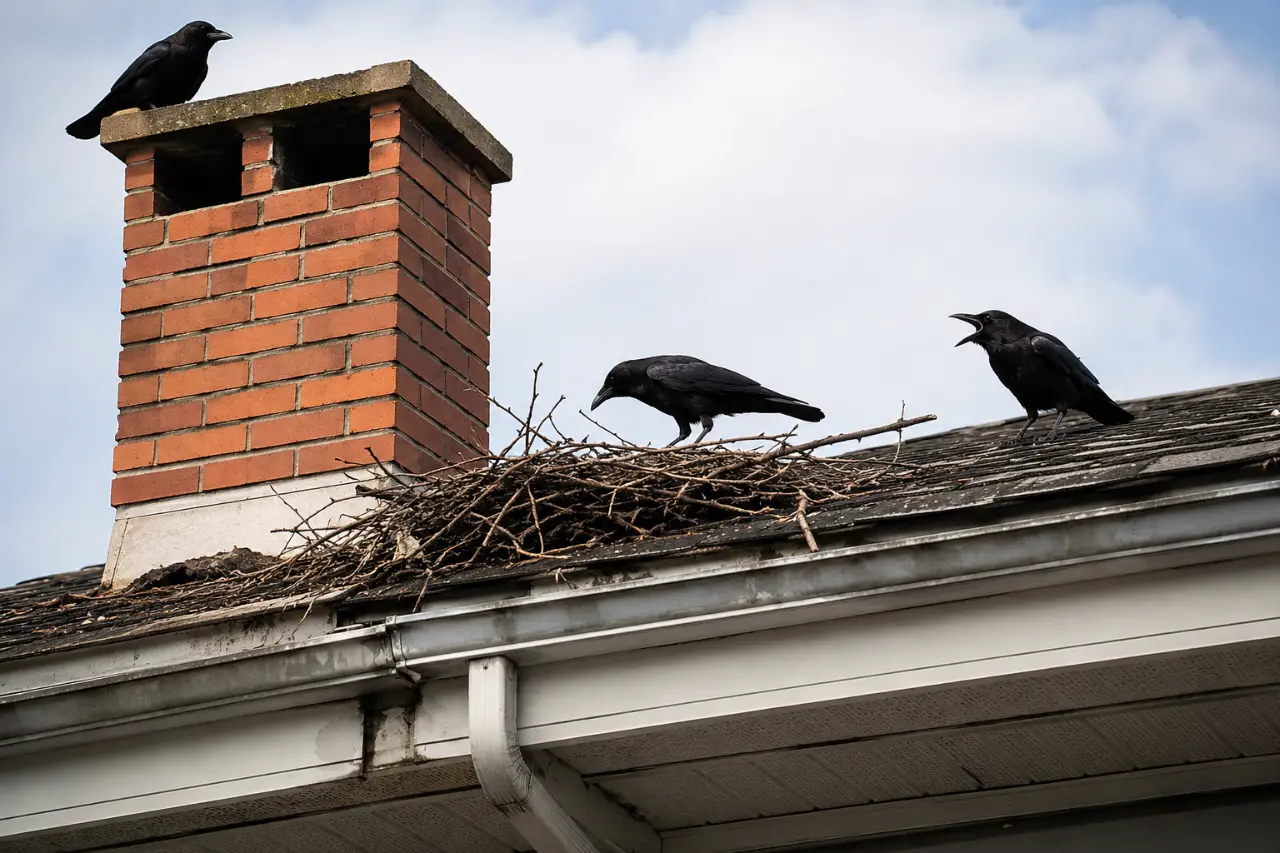
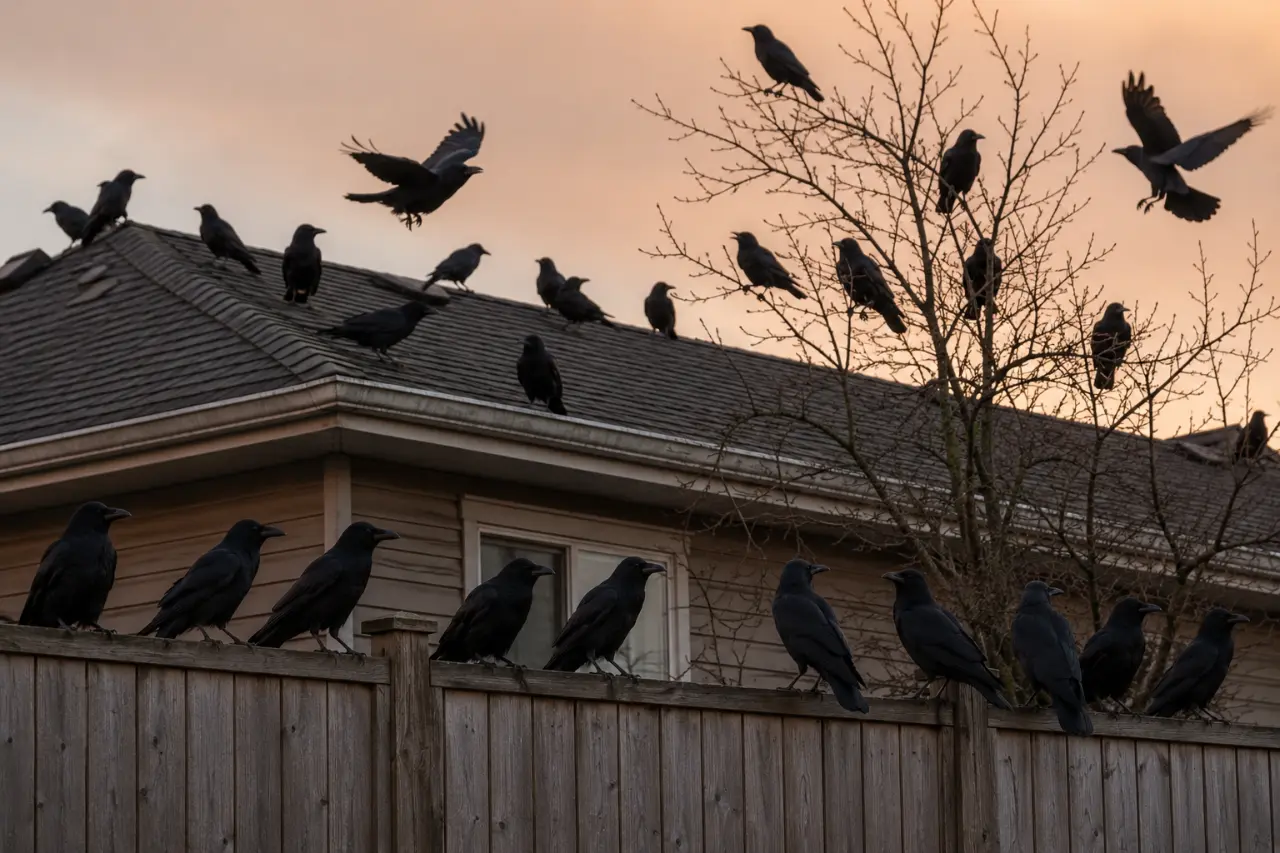
Crows are protected under the Migratory Birds Convention Act in Canada. They are also highly intelligent — they recognise individual human faces, communicate threats to other crows, and quickly learn to ignore ineffective deterrents. Professional deterrent specification must account for their intelligence and adaptability.
Remove food attractants — crows are drawn to accessible garbage, compost, and pet food left outdoors. Eliminate flat, open roosting surfaces where possible and install deterrents before the nesting season begins in March.
Habitat Modification, Acoustic Deterrents & Physical Exclusion (Permit required for active nest management)
Crows quickly habituate to static deterrents such as plastic owls and reflective tape — often within days. Disturbing an active crow nest is illegal under the Migratory Birds Convention Act and will trigger intense, prolonged aggressive behaviour from the entire local flock.
RainCity specifies deterrent programmes that account for crow intelligence — combining habitat modification, physical exclusion of key roosting surfaces, and professionally deployed acoustic deterrents that crows cannot habituate to as rapidly as static devices.
Combination of rooftop physical exclusion using anti-roosting spikes and netting, habitat modification to remove attractants, and professionally deployed acoustic deterrent systems.
Deterrent effectiveness develops over 2–4 weeks as crows relocate their roosting patterns; physical exclusion of specific roosting surfaces is immediate.
Signs of Activity
Early detection prevents small issues from becoming full infestations. Watch for signs in hidden or undisturbed areas.
Large Roost Forming at Dusk
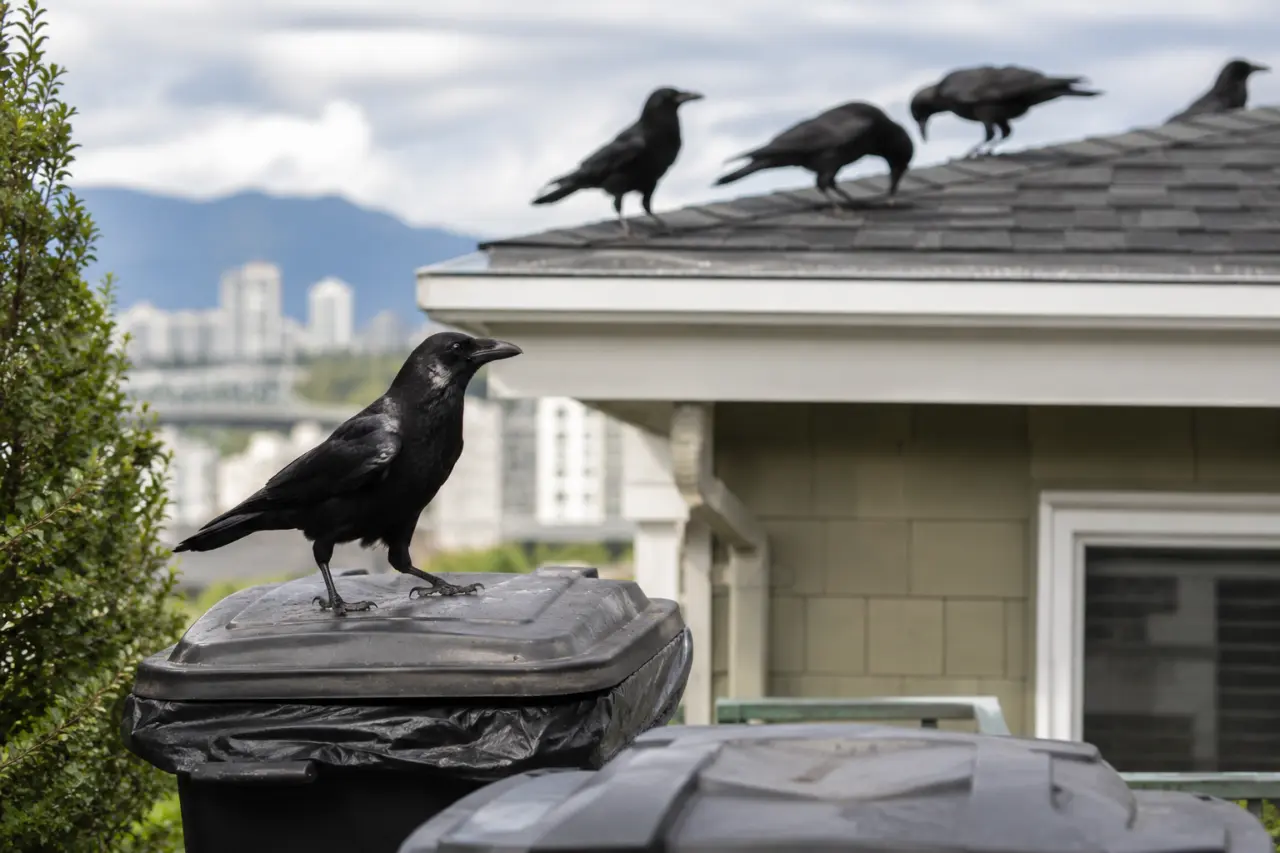
Hundreds or thousands of crows congregating in trees, on rooftops, and on power lines in the same location each evening — the Lower Mainland’s large communal winter roosts are among the most visible crow pest issues.
Dive-Bombing Near Trees or Rooftops
Aggressive swooping and cawing directed at people walking near a nesting pair’s territory — crows are highly protective of their nests and will repeatedly target the same individuals they perceive as threats.
Heavy Droppings on Vehicles and Walkways
Accumulations of white-grey droppings on vehicles, walkways, and building surfaces directly beneath roosting trees or rooftop perching areas.
Loud Cawing at Dawn
Intense, repeated cawing beginning at first light from roosting locations — crow roosts create significant noise disturbance for residents in affected neighbourhoods across the Lower Mainland.
Nesting Material on Roof
Sticks and debris accumulating in gutters and on flat roof areas near where a nesting pair has established their nest in an adjacent tree — crows drop nesting material during construction.
Frequently Asked Questions
Find expert answers to our most common questions and discover how we keep your home or business pest-free.
Yes. American Crows are protected under the federal Migratory Birds Convention Act. Active nests, eggs, and chicks cannot be disturbed without a federal permit. Lethal control is not a management option for most crow situations. Professional deterrent and exclusion programmes are the appropriate approach.
Crows are highly intelligent and have excellent spatial memory. Once a location is identified as safe and food-rich, they will return reliably — and communicate this information to other crows. Effective management requires removing the attractants and making roosting surfaces physically uncomfortable or inaccessible.
Yes — this is well documented in scientific research. Crows can recognise individual human faces and will maintain a grudge against specific people who have threatened them or their nest. A crow that dive-bombs you once during nesting season may target you specifically for years.
Only very briefly. Crows are highly intelligent and typically habituate to static deterrents within a matter of days. Moving the owl regularly extends its effectiveness somewhat, but professional acoustic and physical deterrent systems are significantly more effective for sustained crow management.
Physical exclusion using anti-roosting spikes and netting on preferred perching surfaces is the most reliable approach. Combined with removal of food attractants and professionally deployed acoustic deterrents, this can successfully relocate a crow roost away from your property.
Large accumulations of crow droppings can harbour Histoplasma fungal spores, Salmonella, and other pathogens. Cleaning large roost accumulations should be done with appropriate respiratory protection. Crows are also a known carrier species for West Nile virus, though transmission to humans requires a mosquito vector.
Ready to Get Rid of Crows?
Let our professional team protect your home or business with proven solutions that work.
Schedule an inspection
- Local, licensed & Insured
- Fast Response & Reliable Service
- Satisfaction Guaranteed